Design as a Career: Job Security, Growth & Opportunities in India
Share
Is design a secure career in India? Can it offer financial stability, professional growth and good job opportunities over the next 10 years?
These are common concerns among students considering creative professions and parents evaluating their long-term prospects.
Today, design extends beyond aesthetics. Businesses need designers to improve digital experiences, communicate ideas and solve customer problems.
Design can offer a promising long-term career in India. However, job security depends on professional expertise, industry demand and the ability to adapt to technological changes.
Understanding these factors can help students make informed career decisions.
Is Design a Stable Career in India?
Design can offer long-term employment opportunities, but job security depends on the nature of the work and the value a designer brings to an organisation.
Consider two designers working for an e-commerce company.
One creates promotional graphics using existing templates. The other investigates why customers abandon their shopping carts and redesigns the checkout experience.
Both perform design-related work, but their responsibilities are different.
The first focuses on visual execution, while the second combines research, problem-solving and an understanding of customer behaviour.
As automation advances, repetitive tasks may become easier to complete using AI tools. However, understanding user needs and making informed decisions remain valuable professional capabilities.
Designers who develop expertise beyond software execution may be better positioned for long-term career stability.
Although no profession guarantees permanent employment, specialised knowledge and adaptability can strengthen employability.
Why Are Design Career Opportunities Growing in India?
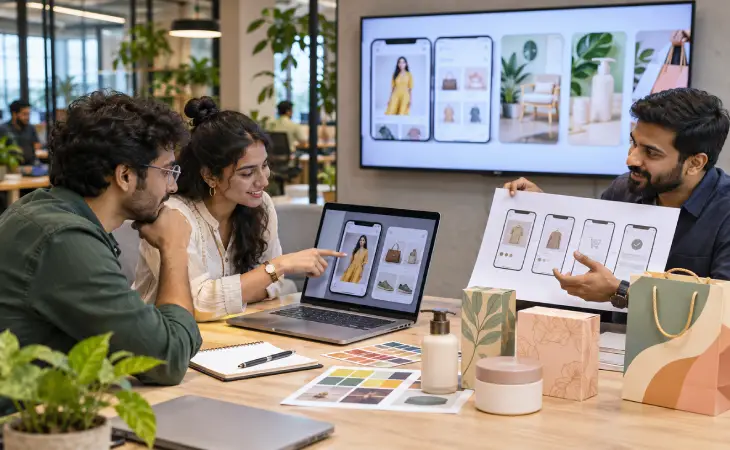
India’s expanding digital economy is creating opportunities for designers across multiple industries.
Businesses increasingly compete through customer experience, usability and effective communication.
For example, banking applications require accessible interfaces, while e-commerce platforms need convenient shopping experiences.
Similarly, healthcare platforms must present complex information clearly, and entertainment companies require engaging visual experiences.
These requirements have expanded the role of design beyond traditional creative agencies.
Students interested in these opportunities can explore how design graduates build careers in branding and communication across different industries.
Growth of India’s Creative Economy
India’s creative industries are also receiving increasing attention from businesses and policymakers.
According to the Ministry of Information and Broadcasting, India’s Animation, Visual Effects, Gaming, Comics and Extended Reality (AVGC-XR) sector may require approximately 20 lakh skilled professionals by 2030.
This projection includes opportunities across design, programming, content production and related disciplines.
The Union Budget 2026–27 also allocated ₹250 crore towards proposed AVGC Content Creator Labs in 15,000 secondary schools and 500 colleges.
These developments indicate growing investment in India’s creative ecosystem.
However, industry projections should not be confused with guaranteed employment. Actual opportunities depend on market conditions, business investment and employer requirements.
Which Design Jobs Have Better Long-Term Prospects?
Not every design role faces the same opportunities or challenges.
The World Economic Forum’s Future of Jobs Report 2025 identifies UI and UX designers among occupations expected to grow rapidly by 2030.
At the same time, graphic designers appear near the fastest-declining roles in its global employment projections.
This does not mean graphic design will disappear.
Instead, it highlights how technological developments may affect different professional responsibilities.
What Makes Certain Design Responsibilities More Resilient?
Tasks involving repetitive production may become increasingly automated.
These include generating basic layouts, producing multiple design variations and completing standardised visual assignments.
In contrast, responsibilities involving research, creative judgement and complex problem-solving require greater contextual understanding.
For example, AI can generate website layouts. However, identifying why users struggle with a particular feature requires research and evaluation.
The distinction is important because many design roles combine both types of responsibilities.
Long-term career prospects may depend more on what a designer can accomplish than on their job title alone.
What Does Career Growth Look Like After 5–10 Years?
A design career can evolve significantly as professionals gain experience.
During the early years, designers typically focus on developing technical proficiency, understanding project requirements and completing assigned work.
With experience, responsibilities may expand to managing projects independently and collaborating directly with clients or stakeholders.
Senior professionals often guide creative decisions, handle complex assignments and contribute to broader business objectives.
Typical Career Progression
| Career Stage | Professional Responsibilities |
|---|---|
| Entry Level | Developing skills and executing assigned projects |
| Mid-Career | Managing projects and building specialised expertise |
| Senior Level | Leading complex assignments and mentoring teams |
| Leadership Level | Managing creative direction, strategy or consulting |
Career progression varies across industries and organisations.
Some designers become creative directors or design leads. Others pursue specialised roles, independent consulting or entrepreneurship.
Professional growth is therefore not limited to managerial promotions.
It can also involve developing deeper expertise and taking responsibility for increasingly challenging work.
Can Designers Build Financially Secure Careers?
Yes, designers can build financially stable careers, although salaries vary depending on experience, specialisation, industry and employer.
An entry-level designer working at a small creative studio may earn differently from someone employed by an established technology company.
Similarly, professionals handling complex projects or strategic responsibilities may have greater earning potential.
What Influences a Designer’s Earning Potential?
- Experience: Greater professional experience can lead to more complex responsibilities.
- Specialisation: Advanced expertise may improve access to particular opportunities.
- Industry: Compensation varies across technology companies, agencies and other organisations.
- Employment type: Full-time employment, freelancing and consulting offer different income structures.
Salaried employment generally provides predictable monthly earnings.
Freelancing offers independence and opportunities to work with multiple clients, but income can fluctuate according to project availability.
For students and parents, focusing only on starting salaries may provide an incomplete picture.
A more useful approach is to consider how earning potential can develop through experience, specialisation and career progression.
For a closer look at pay across career stages, see this visual designer salary guide for India.
Will Artificial Intelligence Replace Design Jobs?
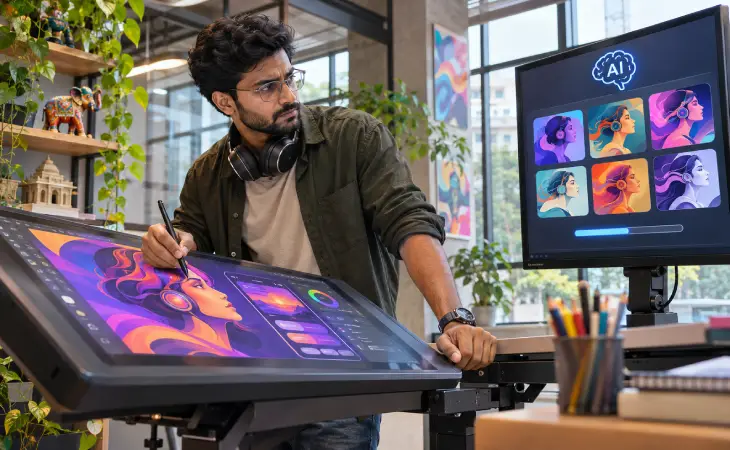
Artificial intelligence is changing how designers work, particularly in repetitive production and visual content generation.
AI tools can already create images, suggest layouts and generate design alternatives.
As these technologies improve, some tasks may require less manual effort.
However, professional design involves more than producing visual content.
Consider a company developing a mobile banking application for older adults.
AI may generate interface concepts, but understanding accessibility concerns and evaluating user difficulties require research and human judgement.
The World Economic Forum estimates that 39% of workers’ core skills will change by 2030.
Its report also identifies creative thinking, technological literacy and adaptability as increasingly important capabilities.
For aspiring designers, this highlights the importance of developing skills beyond software proficiency.
AI may transform design workflows, but understanding people, evaluating problems and making effective decisions will remain important.
The article on whether AI will replace graphic designers or create more opportunities explores how these changes may affect creative careers.
Can Indian Designers Build International Careers?
Design offers opportunities beyond geographical boundaries.
Indian professionals may work with multinational organisations, collaborate with overseas clients or participate in remote creative projects.
For instance, a designer based in Mumbai may contribute to a digital product developed by an international technology company.
However, international opportunities are competitive.
Employers generally evaluate professional expertise, communication skills, experience and previous work.
Employment abroad may also involve additional qualifications and work authorisation requirements.
International exposure is therefore a possible career direction rather than a guaranteed outcome.
What Makes a Design Career Sustainable in the Long Run?
A sustainable design career depends on remaining relevant as industries and technologies evolve.
Designers who begin their careers in traditional visual communication may later contribute to digital branding or interactive experiences.
Similarly, professionals specialising in digital interfaces may expand into accessibility, user research or product strategy.
These transitions become easier when designers understand fundamental principles rather than relying entirely on specific software.
Three qualities are particularly important:
- Adaptability: Learning emerging technologies and adjusting to changing professional requirements.
- Problem-solving: Understanding user needs and developing effective solutions.
- Professional expertise: Building specialised knowledge that supports increasingly complex responsibilities.
Strong design education can help students establish these foundations.
Institutions such as École Intuit Lab emphasise creative thinking and practical design education, helping aspiring professionals develop capabilities relevant to evolving industries.
Is Design a Good Long-Term Career Choice in India?
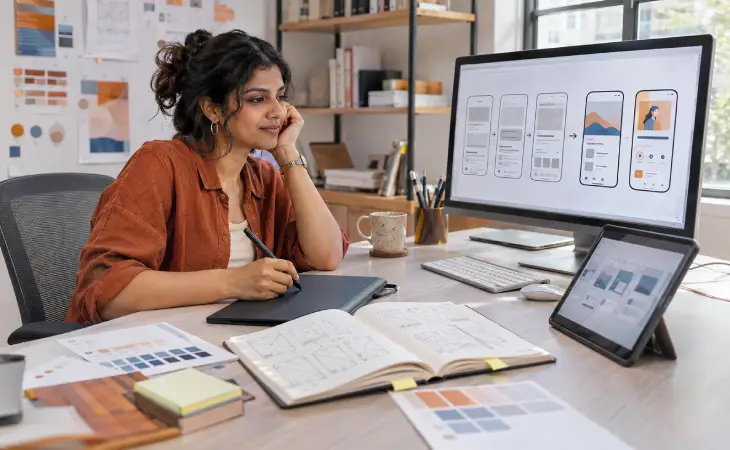
Design offers opportunities across technology, entertainment, commerce and emerging creative industries.
However, industry growth alone does not guarantee job security or financial success.
Professional responsibilities will continue to change as AI advances and businesses adopt new technologies.
For students and parents exploring design as a career in India, the important consideration is whether aspiring designers are prepared to continuously develop their expertise.
Creative talent provides a foundation, but long-term success also requires adaptability, professional judgement and practical problem-solving.
Design can offer a fulfilling and financially sustainable career in India for professionals who remain curious, develop relevant expertise and adapt to changing industry needs.
FAQs
1. Is design a secure career in India?
Yes, design can offer long-term stability depending on professional expertise, experience and industry demand.
2. Will designers be in demand in 2030?
Design-related opportunities are expected to evolve, with global projections indicating growth in UI/UX and digital experience roles.
3. Can designers earn good salaries in India?
Yes, earning potential can increase with experience, specialised expertise and greater professional responsibilities.
4. Will AI replace graphic designers?
AI may automate repetitive design tasks, but research, creative judgement and complex problem-solving remain valuable.
5. Is there career growth in design after 10 years?
Yes, experienced designers can progress into leadership, specialised, strategic, consulting or entrepreneurial roles.
6. Can Indian designers work internationally?
Yes, Indian designers can pursue international employment and remote projects based on their skills, experience and work requirements.