Graphic Design vs UI/UX Design: Which Course Should You Choose After 12th?
Share
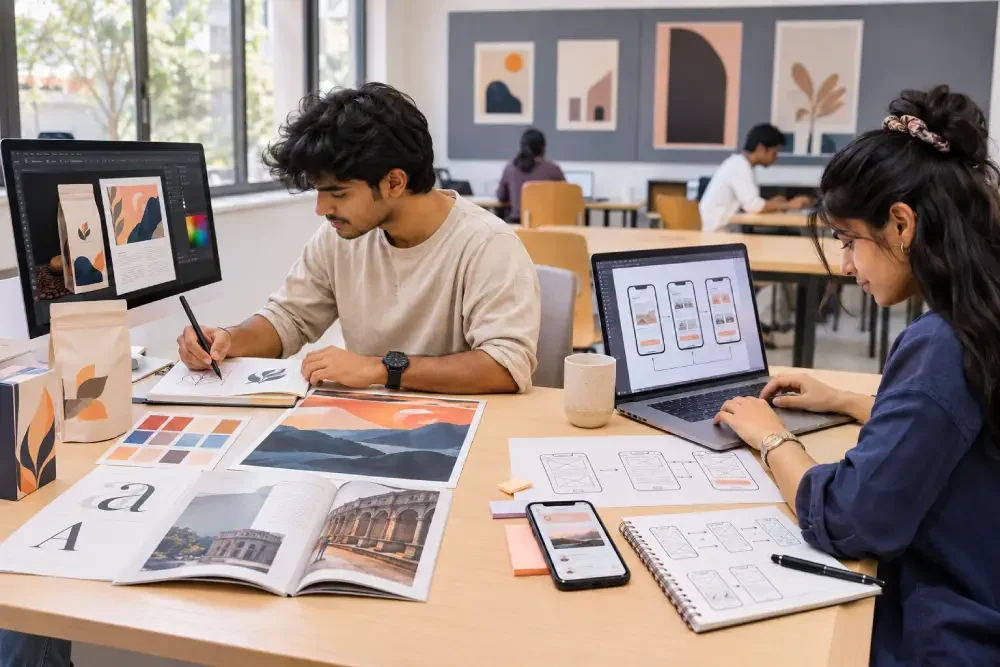
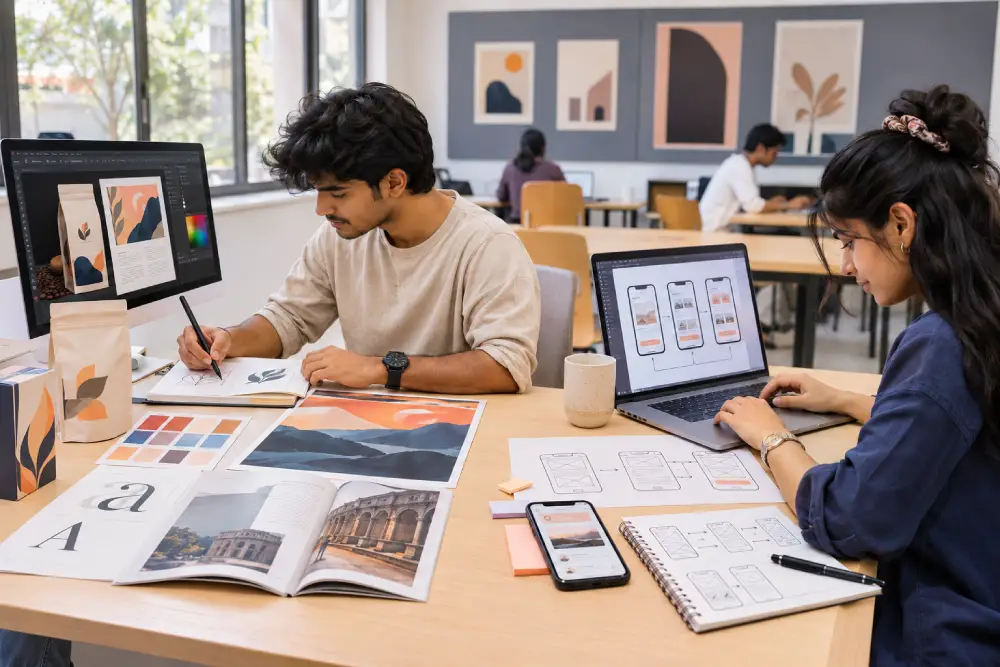
Choose graphic design if you enjoy visual storytelling, typography, branding and communicating ideas through images. Choose UI/UX design if you enjoy understanding how people use websites and apps, solving usability problems and improving digital experiences.
Both are creative fields, but they solve different problems. Graphic design primarily focuses on visual communication, while UI/UX design focuses on how digital products look, function and feel to users.
If you’re confused between these two design courses after 12th, consider not just your interests, but also what you’ll study, the career opportunities available and the kind of work you want to do in the future.
Graphic Design vs UI/UX Design: Key Differences
| Factor | Graphic Design | UI/UX Design |
|---|---|---|
| Primary focus | Visual communication | Digital product experiences |
| Typical projects | Brand identities, packaging, campaigns | Websites, apps, interactive products |
| Key activities | Typography, illustration, visual concepts | User research, wireframing, prototyping |
| Common tools | Illustrator, Photoshop, InDesign, Figma | Figma, FigJam, prototyping and research tools |
| Main outcome | Clear, engaging visual communication | Usable, accessible digital experiences |
| Working approach | Translating messages into effective visuals | Investigating user needs and testing solutions |
These aren’t rigid boundaries. Graphic designers solve communication problems, while UI designers also need strong visual design skills.
What Do Graphic Designers and UI/UX Designers Actually Do?
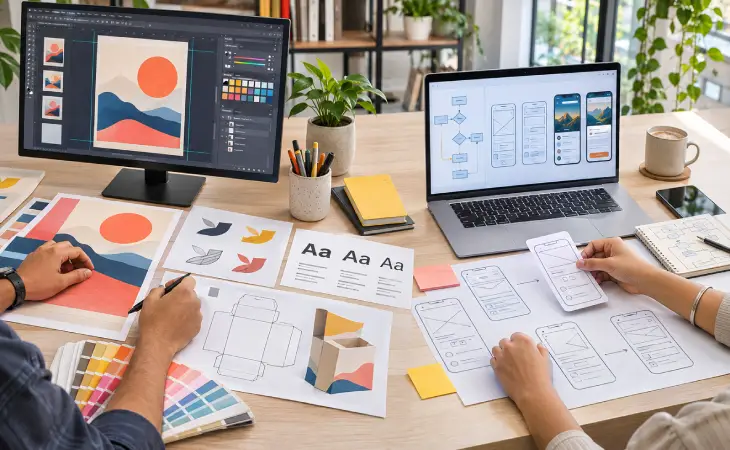
Imagine a new food delivery business launching in your city.
A graphic designer might create its logo, packaging, promotional posters and social media visuals. Their challenge is to communicate the brand’s personality and message consistently.
A UI/UX designer might work on its ordering app. They would investigate how customers browse restaurants, select meals, make payments and track deliveries.
Their challenge is to make these interactions understandable and convenient.
Both contribute to the same business, but they approach different parts of the customer experience.
What Will You Study in Each Course?
Understanding the curriculum is essential because a course’s subjects, projects and teaching methods shape your learning experience.
Graphic Design
A graphic design curriculum may include:
- Typography and visual hierarchy
- Colour theory and composition
- Branding and identity design
- Illustration and image-making
- Editorial and publication design
- Digital communication and advertising design
Students typically develop visual concepts, work on communication briefs and learn to explain the thinking behind their designs.
UI/UX Design
A UI/UX-focused curriculum may include:
- Human-centred design
- User research and behavioural insights
- Information architecture
- Wireframing and interaction design
- Interface design and prototyping
- Usability testing and accessibility
Students learn to identify user needs, develop possible solutions and evaluate how effectively digital products work.
Before choosing a college, examine its actual curriculum. Course names alone don’t reveal how much time students spend on research, practical assignments, technology or visual design.
Career Opportunities: Where Can Each Course Take You?

Your first degree doesn’t necessarily determine your entire career. However, the projects and skills you develop can influence your initial opportunities.
| Graphic Design Pathways | UI/UX Design Pathways |
|---|---|
| Graphic Designer | UI Designer |
| Brand Identity Designer | UX Designer |
| Packaging Designer | Interaction Designer |
| Visual Designer | UX Researcher |
| Art Director (with experience) | Digital Product Designer |
Graphic design graduates may explore opportunities in branding, advertising, publishing and digital communication.
UI/UX graduates may work with technology companies, digital agencies and teams developing digital products.
These pathways can overlap, and specialised positions may require additional experience or training. Understanding digital product design and its applications can provide further perspective on how UX skills connect with broader product development.
What About Salary and Future Scope?
Salary matters when choosing a career, but comparing two average salary figures rarely tells the complete story.
Your earning potential may depend on:
- Skills and specialisation: The complexity of problems you can solve.
- Portfolio quality: How effectively your projects demonstrate your abilities.
- Experience: Your responsibilities and professional development.
- Industry and location: The employer, market and nature of the role.
For example, the average salary of a graphic designer in India can vary considerably across experience levels, locations and specialisations. Similarly, visual designer salaries demonstrate how compensation can differ across design responsibilities and industries.
Neither discipline guarantees a particular salary or career outcome. Consider whether you can see yourself developing expertise in the field over several years.
Do You Need Drawing or Coding Skills?
Two common concerns among students are whether graphic design requires exceptional drawing skills and whether UI/UX design requires programming.
Drawing: Sketching can support creative thinking, but neither field depends entirely on advanced artistic drawing ability.
Coding: Programming is not universally required for UI/UX roles, although basic technical understanding can help designers collaborate with developers.
Both disciplines involve skills that can be developed through structured learning and practice.
Still Confused? Try These Two Mini Projects
Before choosing a design specialisation, spend an afternoon exploring both approaches.
Activity 1: Think Like a Graphic Designer
Imagine launching a sustainable clothing brand.
Create:
- A simple logo concept.
- A promotional Instagram post.
- A colour palette that reflects the brand’s personality.
Notice whether you enjoy developing visual ideas and communicating a message.
Activity 2: Think Like a UI/UX Designer
Think about an app you use regularly.
- Identify one feature that feels difficult to use.
- Sketch a simpler version of the screen.
- Ask a friend to try your proposed solution.
- Observe whether they can complete the task more easily.
Notice whether you enjoy investigating problems and improving how something works.
How to Interpret Your Experience
Rather than judging which final design looks better, reflect on three things:
- Curiosity: Which project made you want to explore more possibilities?
- Problem-solving: Which challenges did you find engaging, even when they were difficult?
- Motivation: Which activity would you willingly spend another three hours improving?
Your answers aren’t a formal aptitude assessment, but they can reveal which design process feels more engaging.
Can You Explore Graphic Design and UI/UX in the Same Degree?

Yes. Some design degree programmes combine visual communication, digital design and interaction design, allowing students to explore related disciplines before developing a specialisation.
For instance, École Intuit Lab offers undergraduate pathways in Visual Communication & Digital Design and Digital Product Design, with practical projects and studio-based learning.
Exploring the subjects and projects within these programmes can help students understand where visual creativity meets digital problem-solving.
Making Your Decision After 12th
Before finalising a course, ask yourself four questions:
- Interest: Which kind of design problems do I genuinely enjoy?
- Education: Which curriculum contains subjects I want to study in depth?
- Career: Which professional responsibilities can I imagine taking on?
- Growth: Am I willing to keep learning as tools, industries and design practices evolve?
If you’re uncertain, explore beginner projects, review student portfolios and compare college curricula before committing.
A good decision isn’t about choosing the field that sounds more impressive. It’s about understanding the work, evaluating your options and selecting a direction you can grow in.
FAQs
1. Which is easier to learn: Graphic Design or UI/UX Design?
Neither is inherently easier; graphic design emphasises visual communication, while UI/UX involves research, interaction and usability.
2. Can I switch from Graphic Design to UI/UX Design later?
Yes, graphic designers can transition into UI/UX by developing skills in user research, wireframing, prototyping and usability testing.
3. Which has better career opportunities in India: Graphic Design or UI/UX Design?
Both offer opportunities across industries; the better choice depends on your skills, specialisation and preferred type of work.
4. Is UI/UX Design more technical than Graphic Design?
UI/UX generally involves more interaction design and digital product knowledge, but coding is not mandatory for every role.