Game Designing Course Fees in India: What Makes One College Different from Another
Share
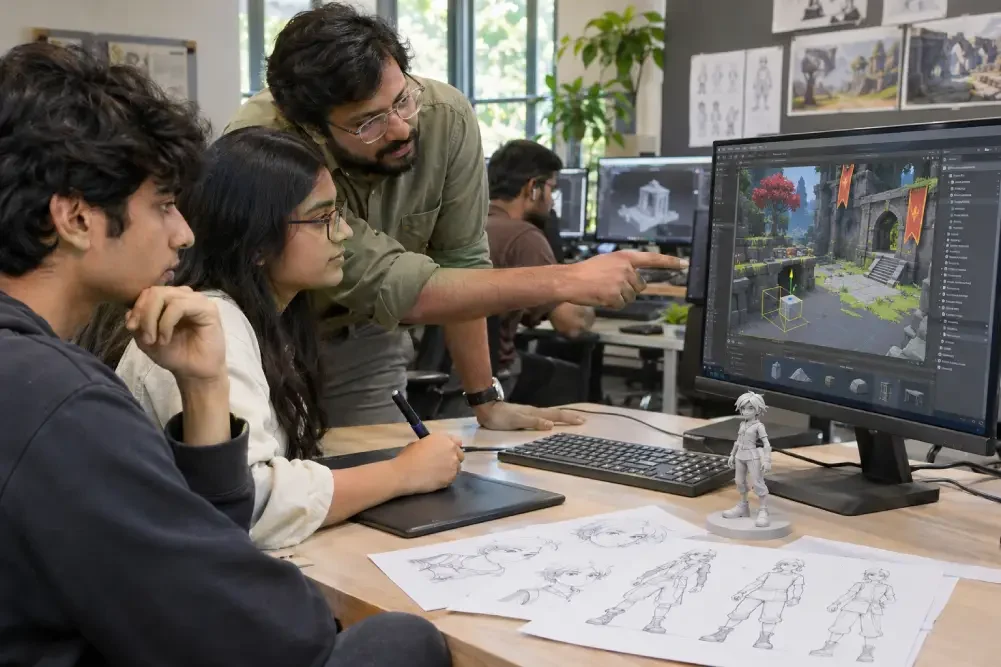
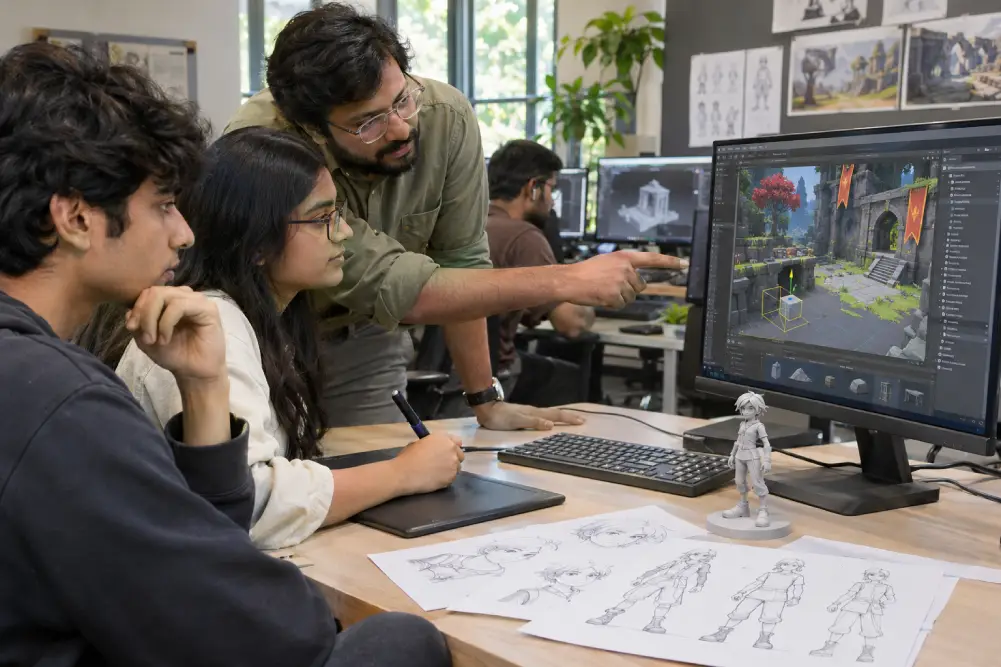
Game designing course fees in India vary depending on the curriculum, specialisations and practical training offered by different colleges. Some programmes emphasise game art and 3D modelling, while others focus on gameplay systems or combine visual design with complete game production. For a four-year undergraduate programme, fees can reach ₹25 lakh–₹27 lakh, depending on the depth of learning, technology and industry exposure provided.
For students choosing a game design college after Class 12, understanding these differences is essential. Two courses may have similar names but offer very different learning experiences.
Why Do Game Designing Course Fees Differ Between Colleges?
Game creation involves multiple disciplines, and colleges may place different levels of emphasis on each one. Understanding the difference between game art and game design can help students evaluate these variations.
For example, developing character artwork involves different skills and resources from designing a playable level or implementing interactive systems in a game engine.
Some institutions offer focused training in particular areas. Others combine these disciplines within a broader Game Art & Design programme.
| Area of training | Primary learning focus | Resources that may influence fees |
|---|---|---|
| Game Art | Character art, environments, concept art and visual assets | Drawing studios, 2D/3D software and rendering facilities |
| Game Design | Gameplay mechanics, level design and player interaction | Game engines, prototyping tools and playtesting facilities |
| Integrated Game Art & Design | Visual creation combined with gameplay and production | Specialist faculty, production software and collaborative projects |
| Technical Game Development | Programming, technical systems and game implementation | Development environments, technical workstations and testing infrastructure |
These are areas of training, not necessarily four separate course qualifications. A single undergraduate programme may cover several of them.
The key consideration is how extensively a college teaches each discipline and which practical resources are available to students.
What Makes Game Art and Design Education Expensive?
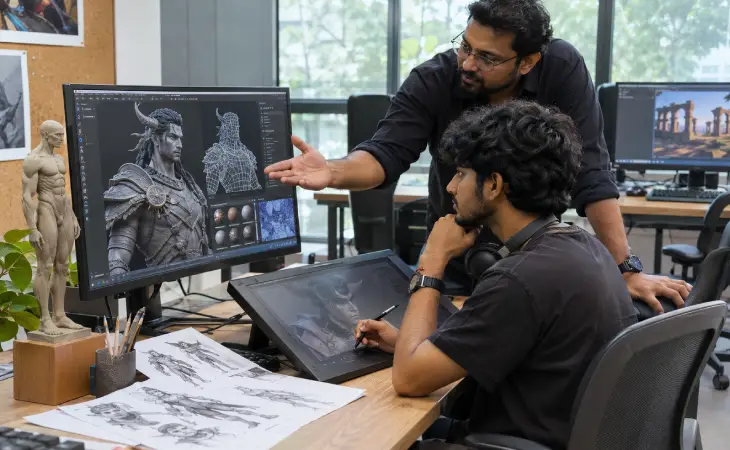
Game creation involves several stages, from developing visual concepts to producing and testing interactive experiences.
The resources required at each stage help explain why certain programmes may charge higher fees.
1. Game Art and 3D Asset Creation
Game art students may work on characters, environments, props, textures and visual effects.
Depending on the complexity of the work, training can require:
- High-performance computers for 3D modelling and rendering
- Digital sculpting, texturing and animation applications
- Graphics tablets and specialist design equipment
- Dedicated computer laboratories and technical support
Why it affects fees: Institutions providing advanced production facilities must account for equipment, maintenance and software access.
However, access matters more than the mere presence of expensive technology. Students should confirm how frequently they can use the facilities and whether personal equipment is also required.
2. Game Engines and Interactive Development
Creating visual assets is only one part of game production.
Students learning interactive game development may also need to understand:
- Game mechanics and player interactions
- Level design and environmental navigation
- Game-engine integration
- Animation and interactive systems
- Testing and gameplay improvements
For example, designing a 3D environment is different from making it functional inside a playable game.
Why it affects fees: Programmes covering interactive development may require additional technical instruction, game-engine training and production resources.
A useful question is whether students create functioning prototypes or primarily complete conceptual design exercises.
3. Collaborative Game Production
Professional game development brings together different disciplines, including artists, designers and programmers.
Some courses introduce collaborative projects in which students work together to build more substantial game experiences.
Such projects may involve:
- Production planning and task allocation
- Integration of artwork and gameplay systems
- Technical problem-solving
- Playtesting and feedback
- Project presentation and evaluation
Why it affects fees: Supervised production can require specialist guidance, extended practical sessions and support across different stages of development.
Students should look for examples of completed collaborative work rather than relying solely on claims about project-based learning.
Does Learning More Software Make a Game Design Course Worth More?
Not necessarily. The value of software training depends on how effectively students apply the tools, not simply how many applications appear in the syllabus.
Consider these two teaching approaches:
| Software-focused training | Production-focused training |
|---|---|
| Introduces several applications | Uses relevant applications to complete substantial projects |
| May emphasise individual tool exercises | Connects different tools within a production workflow |
| Can focus on reproducing tutorials | Encourages original assets and problem-solving |
| Assesses familiarity with software features | Assesses the quality and functionality of completed work |
These approaches are not mutually exclusive. An integrated Game Art & Design programme may use introductory software instruction as the foundation for more complex production work.
For instance, learning to model a character is a valuable starting point. Preparing that character for animation and integrating it into a game environment demonstrates additional production skills.
Students should therefore examine how technical training develops throughout the programme rather than judging it by the number of tools advertised.
How Do Game Design Specialisations Affect Course Fees?
Game art and design education can cover several specialisations within one programme.
Students may begin with common creative and technical foundations before exploring areas such as character art, environment design or technical production.
Each area involves different learning requirements.
Character and Concept Art
Students may focus on illustration, anatomy, character development, visual storytelling and digital sculpting.
Training often requires extensive artistic practice, portfolio feedback and relevant creative software.
Environment and Level Design
Environment artists concentrate on creating visual spaces, while level designers consider how players move through and interact with those spaces.
Depending on the curriculum, training may involve 3D modelling, world-building, level editors, prototyping and game-engine tools.
Technical Art and Game Production
Technical art combines visual production with technical processes such as rigging, asset optimisation, shaders and integration.
These subjects may require specialised instruction and access to suitable development systems.
What students should understand: Specialisations do not always represent separate courses or separate fees. They may form part of a single integrated undergraduate curriculum.
When comparing colleges, check whether specialisation is built into the overall programme or requires additional training.
What Evidence Can Justify Higher Game Design Course Fees?
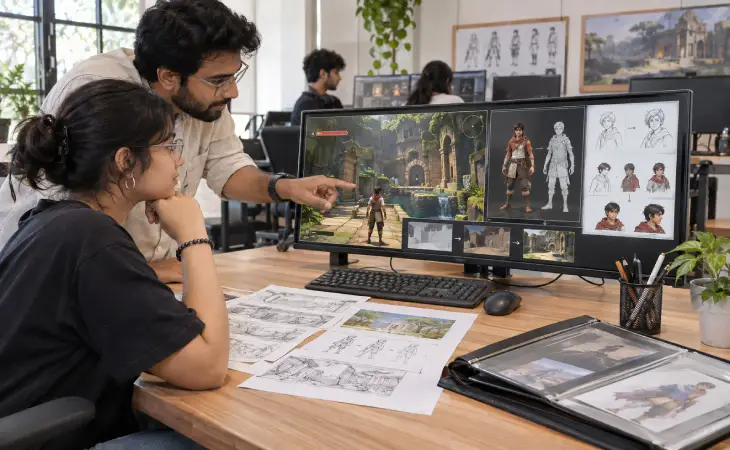
A higher fee does not automatically mean better education.
Students should look for tangible evidence of the learning opportunities being offered.
Three areas are particularly useful.
A. Completed Student Work
Ask to review recent student projects.
For a programme covering game art and production, useful examples include:
- Playable prototypes
- Interactive game levels
- Character and environment assets
- Collaborative game-development projects
A portfolio containing polished artwork demonstrates artistic skills. A working game prototype can demonstrate how different aspects of production come together. Students can also explore how to make a game design portfolio to understand how different projects demonstrate practical skills.
The distinction helps students understand the practical scope of the curriculum.
B. Industry Participation and Measurable Outcomes
Industry involvement becomes more meaningful when colleges can demonstrate how it contributes to students’ practical learning.
For example, École Intuit Lab offers a single, four-year undergraduate programme in Game Art & Design, developed in collaboration with Ubisoft India. Its integrated curriculum covers visual development, game design, 2D/3D production, game engines and practical game-production projects.
The programme also incorporates structured industry exposure.
A snapshot of its reported programme outcomes:
| Metric | Reported information |
|---|---|
| 92.3% | Internship placement rate among eligible Game Art & Design students in 2026 |
| 2 internships | Included in the published four-year programme structure |
| 1–2 months | Duration of the initial internship |
| 6 months | Duration of the long-term internship |
Students have also undertaken internship or industry opportunities involving gaming organisations such as GameEon, Lakshya Digital, Underdogs Studio, Electronic Arts and Ubisoft.
An industry perspective further highlights the importance of practical expertise:
“Creativity and strong skillset are key in video game development”
, Samira Chabani, Human Resources Director, Ubisoft India, in a statement published on École Intuit Lab’s Game Art & Design programme page.
These details demonstrate the type of professional exposure available. However, students should verify the cohort size, eligibility criteria and current internship arrangements before using such outcomes to evaluate a college’s fees.
Internship outcomes do not guarantee permanent employment or a particular salary.
C. Progression of Practical Projects
Students should examine whether the complexity of assignments increases throughout the programme.
For example, a structured learning progression might involve:
- Foundation: Drawing, design principles and visual development
- Technical learning: 2D/3D production, game engines and prototyping
- Applied production: Interactive projects and collaborative development
- Advanced work: Larger projects, portfolio refinement and professional exposure
This is an illustrative progression, not a standard curriculum followed by every institution.
A well-defined progression can help students evaluate the depth of training provided over several academic years.
Can a Lower-Fee Game Design Course Be the Better Choice?
A lower-fee game design course may focus on a single or limited number of skills rather than providing comprehensive game development education.
Consider two different students.
Student A: Wants to learn one specialised skill
A student with an illustration background may want to develop skills in 3D environment modelling.
A focused, lower-fee programme may provide training in that specific skill but may not offer the broader skill set required for game development.
Student B: Wants comprehensive game art and design education after Class 12
A beginner who has not yet explored visual development, gameplay systems or technical production may prefer an integrated programme that introduces multiple disciplines before allowing deeper specialisation.
A longer degree programme may provide a broader learning structure, although it also involves a greater commitment of time and money.
The difference is not simply between cheap and expensive education. It is between programmes offering limited skill training and those providing comprehensive game art and design education.
Five Questions to Ask Before Choosing a Game Design College
When reviewing a programme, the following questions can reveal whether its fees reflect the education offered.
| Question | Why it matters |
|---|---|
| 1. Will students create playable games as well as visual assets? | Clarifies how extensively the curriculum covers practical game production |
| 2. How much access do students receive to game engines and technical facilities? | Establishes whether the necessary production resources are available |
| 3. Are specialisations included within one programme or offered separately? | Helps students understand the academic structure and any additional training requirements |
| 4. Can the college demonstrate completed projects from recent batches? | Provides evidence of student learning and practical outcomes |
| 5. How are game studios involved in the programme? | Helps distinguish structured industry participation from promotional associations |
These answers provide a stronger basis for evaluating fees than comparing course names or college reputations alone.
Conclusion
Game designing course fees in India vary based on curriculum depth, technology, specialisations and practical training. Before choosing a college, students should assess whether the learning experience and available resources justify the investment.
The right programme should balance educational quality, individual interests and affordability.
FAQs
1. What are game designing course fees in India?
Game designing course fees in India can range from approximately ₹25 lakh to ₹27 lakh.
2. Can I pay game designing course fees in instalments?
Yes, many colleges offer semester-wise or annual instalment payment options.
3. Are scholarships available for game designing courses in India?
Yes, some colleges offer merit-based and need-based scholarships to eligible students.
4. Can I get an education loan for game designing course fees?
Yes, eligible students can apply for education loans through banks and financial institutions.
5. Are game designing course fees refundable?
Refunds depend on the college’s admission cancellation policy and applicable rules.