How Design Graduates Build Careers in Branding and Communication
Share


Many students choose design because they enjoy creating visuals, sketching ideas, or experimenting with colours and layouts. However, today’s design industry expects much more than technical expertise. Businesses need professionals who can communicate ideas, build strong brand identities, and create meaningful experiences across digital and physical platforms. As branding and communication become essential across industries such as technology, retail, healthcare, education, and entertainment, design graduates with skills in visual communication, storytelling, and strategic thinking are increasingly in demand. In this blog, we’ll explore how design graduates can build successful careers in branding and communication, the skills employers value, the industries hiring creative professionals, and how to prepare for long-term career growth.
What Careers Can Design Graduates Pursue in Branding and Communication?
Design graduates can pursue rewarding careers in branding and communication as Brand Designers, Visual Communication Designers, Creative Strategists, Advertising Designers, and Art Directors. These professionals work across diverse industries, including advertising, technology, retail, healthcare, and e-commerce, creating compelling brand experiences and effective visual communication. Long-term success in this field comes from combining strong design fundamentals with storytelling, research, strategic thinking, and digital communication skills.
Career Paths in Branding and Communication for Design Graduates
Design graduates can build careers as:
- Brand Designer
- Visual Communication Designer
- Graphic Designer
- Advertising Designer
- Creative Strategist
- Content Designer
- Digital Communication Designer
- Art Director
These roles combine creativity, branding strategy, communication, and digital design to help organisations build memorable brand experiences.
Why Branding and Communication Matter More Than Ever
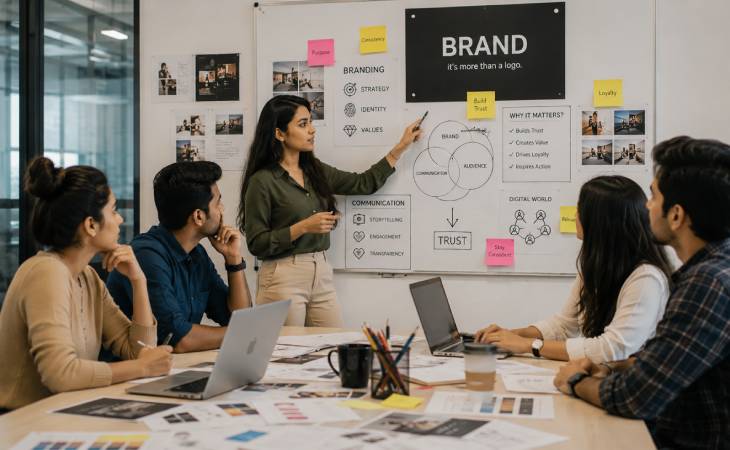
Branding and communication help businesses build recognition, communicate their values, and create consistent experiences across customer touchpoints. Branding goes beyond logos and colours to include visual identity, brand positioning, messaging, and customer perception.
For design graduates, this creates opportunities to contribute to brand strategy, advertising, digital communication, packaging, social media, websites, and customer experiences, not just visual execution.
Modern branding also includes brand positioning, visual identity design, brand strategy, customer perception, and consistent brand communication across online and offline touchpoints.
Communication ensures that this identity reaches the right audience through visuals, messaging, advertising, websites, social media, packaging, and customer experiences. Together, branding and communication help businesses build trust, recognition, and lasting relationships with customers.
For design graduates, this means there are opportunities to contribute far beyond visual execution. Employers increasingly value designers who understand user behaviour, market trends, and business objectives alongside aesthetics.
Designers who understand brand identity design, creative communication, consumer psychology, and marketing communication are increasingly preferred by employers. Consistent brand presentation across platforms has been shown to increase revenue by up to 23%, which is why organisations are investing more heavily in dedicated branding and communication talent.
What Does a Career in Branding and Communication Involve?
A career in branding and communication combines creativity with strategic thinking. Professionals in this field work to develop visual identities, create engaging campaigns, design digital experiences, and ensure consistency across every customer touchpoint.
Depending on your interests, you may find yourself working on:
- Brand identity systems
- Advertising campaigns
- Social media creatives
- Packaging design
- Website and UI visuals
- Motion graphics
- Content design
- Marketing communication
- Digital storytelling
- Campaign strategy
Rather than focusing on a single design discipline, many professionals collaborate with marketing teams, copywriters, photographers, developers, and business leaders to solve communication challenges creatively.
Skills Design Graduates Need to Succeed
Building a successful career requires more than software proficiency. Employers increasingly look for graduates who combine creative thinking with communication and problem-solving abilities.
Strong Visual Communication
The ability to simplify complex ideas through thoughtful design remains one of the most valuable skills. Whether creating an advertisement, infographic, website, or presentation, visual communication helps audiences understand information quickly.
Strong visual communication skills enable designers to create brand experiences, digital campaigns, packaging systems, marketing collateral, and user-focused communication materials that support business objectives.
Brand Thinking
Understanding how brands create emotional connections with audiences allows designers to create work that goes beyond aesthetics. Learning how colours, typography, imagery, tone of voice, and messaging work together is essential.
Digital Design Skills
Today’s branding exists across multiple digital platforms. Knowledge of UI design, social media design, motion graphics, responsive layouts, and digital marketing assets makes graduates more versatile.
Storytelling
People remember stories more than advertisements. Designers who understand visual storytelling create campaigns that connect emotionally with audiences and leave a lasting impression.
Effective storytelling also strengthens brand engagement, customer loyalty, and emotional connections, making it an essential skill for branding professionals.
Research and Strategy
Successful creative solutions begin with understanding users, competitors, market trends, and business goals. Research helps ensure design decisions are informed rather than based solely on personal preference.
Knowledge of the market, audience segmentation, consumer behaviour, competitor analysis, and brand positioning helps designers make more strategic creative decisions.
Collaboration
Branding projects often involve multidisciplinary teams. Being able to communicate ideas, accept feedback, and work alongside marketers, developers, writers, and clients is equally important.
Career Opportunities in Branding and Communication
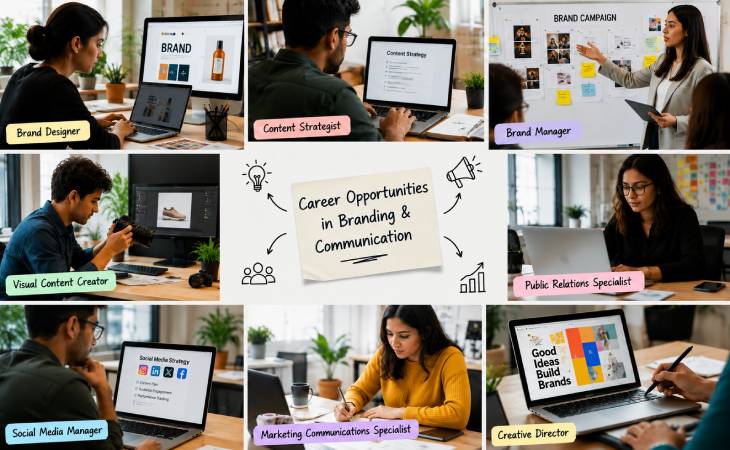
One of the biggest advantages of specialising in branding and communication is the wide variety of career paths available after graduation.
Brand Designer
Brand designers create visual identities that reflect an organisation’s personality. They develop logos, typography systems, colour palettes, brand guidelines, and marketing collateral.
Visual Communication Designer
These professionals create visual solutions that communicate information effectively across print, digital, and interactive platforms.
Graphic Designer
Graphic designers support branding initiatives through advertisements, brochures, social media creatives, presentations, packaging, and promotional materials.
Advertising Designer
Advertising designers develop campaigns across digital and traditional media, ensuring visuals capture attention while communicating the intended message. If you’re interested in this career path, explore our guide on Advertising Design: Crafting Visual Stories That Sell to understand how advertising combines creativity, storytelling, and strategic communication to influence audiences naturally.
Digital Communication Designer
These designers focus on creating engaging experiences for websites, social media, email campaigns, digital advertisements, and mobile platforms.
Creative Strategist
Creative strategists combine consumer insights, market research, and business objectives with creative thinking to develop impactful campaigns and brand experiences.
Content Designer
Content designers organise visual and written information to improve user understanding across websites, applications, educational platforms, and marketing campaigns.
Art Director
With experience, many designers progress into leadership roles where they oversee creative direction, manage teams, and maintain brand consistency across multiple projects.
These branding and communication careers continue to expand as organisations invest more in digital branding, integrated marketing, content strategy, and customer experience design.
Industries Hiring Branding and Communication Professionals
One of the strongest aspects of this career path is its versatility. Almost every industry requires professionals who can communicate ideas visually and strengthen brand identity.
Some of the leading industries include:
- Advertising agencies
- Branding and design consultancies
- Digital marketing agencies
- Media and entertainment
- Technology companies
- E-commerce businesses
- Fashion and lifestyle brands
- FMCG companies
- Healthcare organisations
- Educational institutions
- Hospitality and tourism
- Startups and entrepreneurship
Branding and communication is only one of many exciting pathways available after design school. As the creative industry continues to evolve, graduates are also finding opportunities in emerging interdisciplinary roles. You can explore the scope of visual communication and its career opportunities to understand how design skills can translate into different professional paths.
Beyond traditional agencies, branding professionals are increasingly hired by SaaS companies, fintech startups, D2C brands, nonprofit organisations, consulting firms, and global enterprises looking to strengthen their brand presence.
How Technology is Shaping the Future of Branding and Communication

Technology continues to transform the design industry at a rapid pace. Brands now interact with customers through websites, mobile applications, social media, augmented reality, video platforms, and AI-powered experiences.
As a result, design graduates are expected to understand not only visual design but also digital ecosystems and evolving consumer behaviour.
Some emerging opportunities include:
- Brand experience design
- Motion design
- Interactive media
- AI-assisted creative workflows
- UX-focused branding
- Digital campaign strategy
- Content experience design
- Immersive storytelling
While technology is changing design tools, creativity, empathy, strategic thinking, and human-centred problem-solving remain qualities that cannot easily be replaced.
Employers increasingly seek professionals who can combine human creativity with AI-assisted design tools, ensuring that technology enhances rather than replaces strategic thinking.
How Students Can Prepare During Their Design Education
Your journey towards a successful career begins well before graduation. Every classroom project, internship, and portfolio piece contributes to your professional growth.
To improve your career prospects:
- Build a portfolio that demonstrates both creativity and strategic thinking.
- Explore real-world branding projects alongside academic assignments.
- Learn industry-standard design software while also understanding design principles.
- Develop presentation and communication skills.
- Stay updated with design trends, branding strategies, and digital technologies.
- Seek internships that expose you to client-based projects and collaborative work environments.
- Practice receiving and applying constructive feedback to improve your work.
Employers often value evidence of your thinking process just as much as the final design outcome.
Before applying for internships or full-time roles, invest time in creating a professional portfolio that highlights your branding projects, visual communication skills, and design thinking. A thoughtfully curated portfolio can help you stand out in a competitive job market. If you’re unsure where to begin, explore our Complete Guide to Building a Design Portfolio where you’ll find practical tips for organising projects, presenting your creative process, and showcasing your strengths effectively.
Building a Long-Term Career Beyond Your First Job
Your first role is only the beginning. The most successful professionals continue learning throughout their careers as technology, consumer expectations, and communication channels evolve.
As you gain experience, you may specialise in areas such as brand strategy, creative direction, digital communication, user experience, advertising, or integrated marketing. Others may establish their own design studios or work independently with global clients.
The key is to remain curious, build diverse experiences, and continuously strengthen both your creative and strategic abilities.
If you’re looking to deepen your understanding of branding, advertising, and digital creative practices after graduation, exploring a Post Graduate Programme in Advertising and Digital Design can provide structured exposure to these evolving industry skills.
Key Takeaways
- Branding and communication combine creativity with business strategy.
- Design graduates can pursue careers in branding, advertising, digital communication, content design, and creative strategy.
- Strong visual communication, storytelling, research, and collaboration skills improve employability.
- Opportunities exist across technology, media, retail, healthcare, education, startups, and global brands.
- Continuous learning and a strong portfolio help designers build long-term career growth.
As businesses continue investing in digital transformation, the demand for professionals skilled in branding, communication design, visual storytelling, and customer experience is expected to grow steadily over the coming years.
Conclusion
A career in branding and communication offers design graduates the opportunity to combine creativity with strategy, storytelling, and business thinking. As organisations increasingly recognise the value of strong brand experiences, the demand for professionals who can communicate ideas effectively continues to grow across industries.
Whether you aspire to become a brand designer, creative strategist, advertising professional, or digital communication specialist, the opportunities are broader than ever before. By developing a strong foundation in design principles, understanding audience behaviour, embracing new technologies, and building an impressive portfolio, you can create a career that is both creatively fulfilling and professionally rewarding.
The future belongs to designers who can think beyond visuals and create meaningful connections between brands and people. With the right skills, continuous learning, and practical experience, you can confidently build a successful career in the ever-evolving world of branding and communication.
Frequently Asked Questions
1. What career opportunities are available in branding and communication after a design degree?
Design graduates can work as brand designers, visual communication designers, creative strategists, content designers, advertising designers, and art directors.
2. Is branding and communication a good career for design graduates?
Branding and communication is a strong career path for design graduates, offering roles in advertising, digital marketing, and creative strategy with consistent demand across industries like technology, retail, and healthcare.
3. What skills are required to build a career in branding and communication?
Key skills include visual communication, branding, storytelling, design thinking, research, digital design, and collaboration.
4. Which industries hire branding and communication professionals?
Industries such as advertising, technology, media, retail, healthcare, education, e-commerce, and startups actively hire branding professionals.
5. Can design graduates work in digital marketing?
Yes, design graduates can contribute to digital marketing through content design, social media creatives, visual branding, and campaign design.


