How Much Does a Visual Designer Earn in India? Salary Guide for Students
Share
If you’re considering a career in design, one of the first questions you’re likely to ask is: how much does a visual designer earn in India?
A visual designer in India can earn around ₹3 LPA to ₹6 LPA at the entry level, while experienced professionals can move into the ₹10 LPA to ₹18 LPA+ range depending on their skills, portfolio, experience, location, and employer. Current salary data also shows that visual design compensation can vary considerably across roles and companies.
For students, the important takeaway is that salary growth in visual design is closely connected to the ability to combine strong design fundamentals with specialised digital skills.
What Is the Average Visual Designer Salary in India?
Visual designer salaries vary based on experience and specialisation. A general industry benchmark looks like this:
| Experience Level | Indicative Annual Salary |
|---|---|
| Entry-Level (0–2 years) | ₹3–6 LPA |
| Mid-Level (3–5 years) | ₹6–10 LPA |
| Senior Visual Designer (6–10 years) | ₹10–18 LPA |
| Design / Creative Lead | ₹18–30 LPA+ |
These are indicative ranges rather than guaranteed salaries. Public salary platforms report different figures because compensation depends on the company, location, experience, job title, skills, and individual profile. For example, Glassdoor’s India data currently reports an average visual designer salary of approximately ₹7.5 LPA, with a typical reported range of about ₹5.3–₹11 LPA.
What Does a Visual Designer Do?
A visual designer combines creativity, design principles, and digital tools to create visual experiences that communicate a brand’s message effectively. Their work can range from developing brand identities and marketing campaigns to designing digital interfaces and visual content.
Depending on their role and specialisation, visual designers may work on:
- Brand identity and visual systems
- Websites and mobile interfaces
- Advertising and marketing campaigns
- Social media and digital content
- Typography, layouts, and illustrations
- Motion graphics and visual storytelling
- Packaging and editorial design
- Digital product experiences
As their experience grows, visual designers can move into specialised roles such as UI Designer, Brand Designer, Motion Graphics Designer, or Creative Lead, with their responsibilities expanding from design execution to creative strategy and direction.
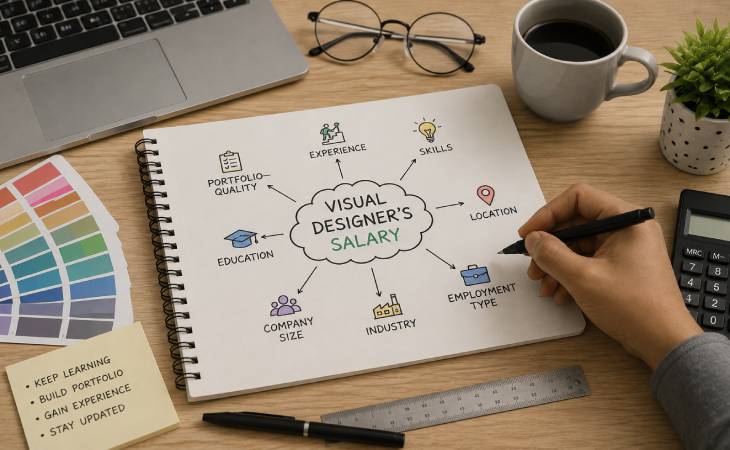
What Factors Affect a Visual Designer’s Salary?
1. Experience
Experience is one of the strongest factors affecting salary. As designers progress from execution-focused work to more strategic responsibilities, their earning potential generally increases.
A senior designer may be expected to manage projects, develop visual systems, collaborate with other teams and guide junior designers, not simply create individual graphics.
2. Skills and Specialisation
A broader and more specialised skill set can create access to a wider range of opportunities.
Skills that can strengthen a visual designer’s profile include:
- UI and digital interface design
- Branding and identity systems
- Motion graphics
- Typography
- Design systems
- Figma
- Adobe Creative Cloud
- Design thinking
- AI-assisted design workflows
For students exploring this career, understanding the skills required for a successful career in Visual Communication can help identify the capabilities employers look for.
3. Portfolio
For design professionals, a portfolio is often one of the most important parts of the hiring process. Students and early-career designers can also learn how to build a design portfolio that gets you hired, particularly by presenting their thinking and process alongside the final work.
Instead of simply displaying finished designs, an effective portfolio can demonstrate:
- The problem you were solving
- Your creative thinking
- Your design process
- The final outcome
- Your ability to work across different formats
A strong portfolio gives employers a clearer understanding of how a candidate approaches real design challenges.
4. Industry and Employer
Visual designers work across technology, SaaS, e-commerce, advertising, media, entertainment, finance, gaming, education and other industries.
Digital-first companies and organisations with large product, branding or marketing teams may offer different compensation structures from smaller agencies or traditional design businesses.
5. Location
Salary levels can also differ by city. Major design and technology hubs such as Bengaluru, Mumbai, Delhi NCR, Pune, and Hyderabad offer a broad range of opportunities.
| City | Indicative Annual Salary for Visual Designers |
|---|---|
| Bengaluru | ₹6–₹12 LPA |
| Mumbai | ₹4–₹11 LPA |
| Delhi NCR | ₹4–₹11 LPA |
| Pune | ₹5–₹10 LPA |
| Hyderabad | ₹5–₹8 LPA |
Salary Across Visual Design Career Paths
Visual design can lead to several specialised career paths. Salary varies by company and experience, but these roles can offer different directions for professional growth:
| Role | Indicative Annual Salary in India | Primary Focus |
|---|---|---|
| Visual Designer | ₹5–₹12 LPA | Digital and brand-focused visual communication |
| UI Designer | ₹3.5–₹8 LPA | Interfaces for websites and digital products |
| Brand Designer | ₹5.8–₹13 LPA | Brand identity and visual systems |
| Motion Graphics Designer | ₹3–₹5 LPA | Animation and moving visual content |
| Creative Lead | ₹8–₹18 LPA | Creative direction and design leadership |
Visual design can lead to several specialised career paths. Salary varies by company and experience, but these roles can offer different directions for professional growth.
Choosing a specialisation based on your interests and strengths can help you build a more focused portfolio and career profile.
How Can Students Increase Their Earning Potential?

A higher starting salary isn’t only about having a design degree. Students can strengthen their profile by:
- Build Real-World Experience: Internships, freelance assignments, collaborative projects, and personal design challenges can help students understand professional workflows and apply their skills to real design problems.
- Gain practical experience: Internships, freelance projects and collaborative assignments can help you understand professional workflows.
- Learn industry-standard tools: Stay Current: Design practices and technologies continue to evolve. Keeping up with emerging tools, technologies, and creative workflows can help designers remain adaptable throughout their career
- Develop a specialisation: Combining visual design with UI, branding, motion or digital experiences can expand career options.
- Strengthen Communication and Problem-Solving: Professional designers need to explain their ideas, understand project requirements, collaborate with different teams, and make design decisions based on specific objectives. Developing these abilities can be just as important as learning software.
Is Visual Design a Good Career in India?
Yes, visual design can offer a wide range of career opportunities for students who enjoy combining creativity with technology and communication.
The field offers opportunities across branding, digital products, advertising, media, entertainment, technology, and other creative industries. Understanding visual communication career paths and future opportunities can also help students identify which direction best matches their interests and strengths. With experience and specialised skills, designers can progress into focused design roles or move towards creative and design leadership.
The earning potential ultimately depends on the value you can bring to an organisation, not just the job title you hold.
At École Intuit Lab, students develop design skills through practical projects, portfolio development and industry exposure. The Undergraduate Programme in Visual Communication is designed for students interested in visual communication, branding, digital design and related creative careers.
Final Thoughts
Visual design offers a dynamic career path for students who enjoy combining creativity, technology, and communication. As the field continues to evolve, designers who can adapt to new tools, understand digital experiences, and approach real-world challenges with creative thinking can build diverse career opportunities.
If you’re planning to enter the field, focus on becoming a designer who can think, communicate, and solve problems visually, not simply someone who knows design software. A strong foundation in design, practical experience, and a portfolio that reflects your thinking can help you build a meaningful and future-ready career.
Frequently Asked Questions
1. What is the starting salary of a visual designer in India?
Entry-level visual designers can typically earn around ₹3–6 LPA, depending on their skills, portfolio, location, and employer.
2. Which city pays the highest salary to visual designers in India?
Bengaluru, Mumbai, Delhi NCR, Pune, and Hyderabad are among the major cities offering strong opportunities and competitive salaries for visual designers.
3. Is UI/UX a good career path for visual designers?
Yes. Visual designers with UI/UX skills can explore opportunities in digital products, websites, and applications, making it a valuable specialisation for expanding career options.
4. What skills are needed to become a high-paying visual designer?
Skills in UI design, branding, typography, motion graphics, design systems, Figma, Adobe Creative Cloud, and design thinking can help visual designers build stronger career profiles.
5. Is visual design a good career in India?
Yes. Visual design offers career opportunities across technology, branding, advertising, media, e-commerce, entertainment, and digital products, with opportunities to progress into specialised and leadership roles.


