Why Creative Thinking Is One of the Most In-Demand Skills in 2026
Share
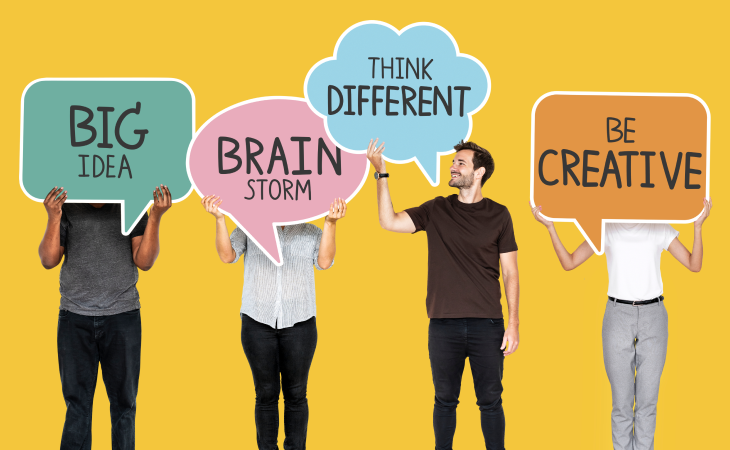
Artificial intelligence can generate text, create images, analyse data, and automate repetitive tasks within seconds. Yet, one skill continues to stand out across industries, creative thinking.
Businesses are no longer looking for professionals who can simply follow instructions. They want people who can generate original ideas, solve unfamiliar problems, adapt to change, and identify opportunities that machines cannot recognise on their own. Whether it’s designing a digital product, developing a marketing campaign, improving a customer experience, or creating an innovative business solution, creative thinking has become a competitive advantage.
For students preparing for future careers, understanding Creative Thinking Techniques is no longer limited to designers or artists. It is becoming an essential skill in technology, business, healthcare, education, engineering, entrepreneurship, and many other fields.
What Is Creative Thinking?
Creative thinking is the ability to generate original ideas, explore different perspectives, and develop effective solutions to problems. It combines imagination with logical thinking to produce ideas that are both innovative and practical.
Creative thinking isn’t about being naturally artistic. It’s a skill that can be developed through observation, experimentation, curiosity, and continuous learning.
Professionals who think creatively often ask questions such as:
- Is there a simpler way to solve this problem?
- What if we approached this differently?
- How can this experience be improved?
- What opportunities are others overlooking?
These questions often lead to innovation.
Why Is Creative Thinking More Important in 2026?

The workplace is changing rapidly. Automation and AI are taking over repetitive and predictable tasks, allowing professionals to focus on work that requires human judgment, creativity, and strategic thinking.
This shift has made creative thinking one of the most valuable workplace skills.
Employers increasingly value professionals who can:
- Solve unfamiliar problems.
- Adapt to changing technologies.
- Generate innovative ideas.
- Improve products and services.
- Collaborate across different teams.
- Make decisions in uncertain situations.
Rather than replacing creativity, AI has made human creativity even more valuable because original thinking remains difficult to automate.
How Creative Thinking Drives Innovation Across Industries
Creative thinking influences almost every profession. Although the application differs from one industry to another, the goal remains the same, finding better ways to solve problems.
| Industry | How Creative Thinking Creates Value |
|---|---|
| Design | Creating user-centred products, services, and experiences. |
| Technology | Developing innovative digital solutions and improving user experiences. |
| Business | Identifying new markets, products, and growth opportunities. |
| Healthcare | Improving patient experiences and solving healthcare challenges. |
| Education | Designing engaging and effective learning experiences. |
| Marketing | Developing memorable campaigns that connect with audiences. |
Regardless of the industry, organisations depend on professionals who can think beyond conventional solutions.
Creative Thinking Techniques That Employers Value
Creative thinking is not based on random inspiration. Professionals use structured techniques to analyse problems, generate ideas, and test solutions.
1. Brainstorming
Brainstorming encourages teams to generate multiple ideas without judging them too early. By exploring different possibilities first, organisations often discover innovative solutions that may not emerge through conventional thinking.
2. Design Thinking
Design Thinking focuses on understanding people’s needs before developing solutions. It combines empathy, research, ideation, prototyping, and testing to solve real-world problems, making it widely used in design, technology, healthcare, and business innovation.
3. Mind Mapping
Mind mapping helps organise ideas visually by connecting related concepts around a central problem. This technique encourages broader thinking and often reveals opportunities that linear note-taking may overlook.
4. Reverse Thinking
Instead of asking how to solve a problem, reverse thinking asks how the problem could become worse. Analysing these answers often reveals hidden challenges and inspires more effective solutions.
5. SCAMPER Technique
The SCAMPER framework encourages professionals to improve existing ideas by asking whether they can Substitute, Combine, Adapt, Modify, Put to another use, Eliminate, or Reverse different aspects of a product, service, or process.
These techniques demonstrate that creativity is a structured skill that can be learned, practised, and applied across professional environments.
Skills That Strengthen Creative Thinking
Creative thinking becomes more effective when combined with other professional skills. Employers often look for individuals who can transform ideas into practical solutions rather than simply generate ideas.
Some of the most valuable complementary skills include:
- Critical thinking
- Problem-solving
- Observation and research
- Communication
- Collaboration
- Adaptability
- Curiosity
- Decision-making
Together, these abilities help professionals evaluate ideas, refine solutions, and work effectively with multidisciplinary teams.
How Students Can Develop Creative Thinking
Creative thinking is developed through consistent practice rather than natural talent. Students can strengthen this skill by exposing themselves to new experiences and challenging their assumptions.
Some practical ways to improve include:
- Solve real-world problems instead of memorising answers.
- Analyse why successful products, apps, or services work well.
- Sketch ideas before choosing a final solution.
- Participate in design challenges and innovation competitions.
- Read about different industries and emerging technologies.
- Work on collaborative projects that encourage multiple perspectives.
- Reflect on feedback and continuously improve your ideas.
The more frequently you practise generating and testing ideas, the more confident you become at solving unfamiliar problems.
Student Insight: Creativity grows when you explore different possibilities without worrying about finding the “perfect” answer immediately.
Why Employers Prioritise Creative Thinkers
Technical skills can often be learned through training, but creative thinking enables professionals to adapt as industries evolve.
Recruiters increasingly value candidates who can:
- Approach challenges from different perspectives.
- Learn quickly when technology changes.
- Improve existing products and services.
- Collaborate with people from different disciplines.
- Contribute original ideas during projects.
In fast-changing workplaces, organisations benefit from employees who can identify opportunities rather than simply complete assigned tasks.
Career Opportunities Where Creative Thinking Matters

Creative thinking is valuable across a wide range of professions because innovation is no longer limited to creative industries.
| Career Role | How Creative Thinking Is Applied |
|---|---|
| UX / Interaction Designer | Creates intuitive and user-friendly digital experiences. |
| Product Designer | Solves user and business problems through design innovation. |
| Graphic Designer | Develops visual communication that captures attention. |
| Marketing Professional | Creates campaigns that engage audiences and strengthen brands. |
| Business Strategist | Identifies growth opportunities and innovative business solutions. |
| Entrepreneur | Develops new products, services, and business models. |
| Innovation Consultant | Helps organisations improve processes and customer experiences. |
Regardless of the profession, creative thinking supports better decision-making, innovation, and long-term career growth.
Why Creative Thinking Will Continue to Matter
As artificial intelligence becomes more capable, many routine tasks will continue to be automated. However, AI still depends on human direction, context, and judgment to solve complex problems.
Professionals who combine creativity with analytical thinking, collaboration, and adaptability will be better equipped to work alongside emerging technologies rather than compete with them.
The future belongs to individuals who can ask better questions, connect unrelated ideas, and create solutions that deliver meaningful value.
Conclusion
Creative thinking has become one of the most valuable professional skills because it helps individuals adapt, innovate, and solve problems in an increasingly technology-driven world. From design and business to healthcare and engineering, organisations are seeking professionals who can think beyond conventional solutions and contribute fresh ideas.
For students planning their future careers, developing creative thinking is an investment that extends far beyond a single profession. Learning how to observe, question, experiment, and collaborate can prepare you for opportunities across multiple industries.
At Ecole Intuit Lab, students build these future-ready skills through industry-led learning, hands-on projects, and real-world design experiences. Explore our design programs and take the first step towards a creative career.
FAQs
1. Is creative thinking an important skill in 2026?
Yes. As AI automates repetitive tasks, employers increasingly value professionals who can solve complex problems, generate original ideas, and adapt to changing technologies.
2. Can creative thinking be learned?
Yes. Creative thinking is a skill that improves through observation, practice, experimentation, and exposure to different ideas rather than being an inborn talent.
3. Do only designers need creative thinking skills?
No. Creative thinking is valuable in business, technology, healthcare, education, engineering, marketing, entrepreneurship, and many other professions where innovation and problem-solving are important.
4. Which Creative Thinking Techniques are most commonly used?
Brainstorming, Design Thinking, mind mapping, reverse thinking, and the SCAMPER method are among the most widely used techniques because they help individuals and teams generate, evaluate, and refine ideas systematically.
5. Does AI reduce the importance of creative thinking?
No. AI can assist with generating ideas, but humans remain responsible for understanding context, making strategic decisions, and developing original solutions that meet real-world needs.
6. How can students improve their creative thinking skills?
Start by solving real problems, exploring different perspectives, seeking feedback, and working on practical projects. Consistent practice and curiosity are the most effective ways to strengthen creative thinking over time.


