Viscom Course Subjects Explained: What You’ll Learn and Why It Matters
Share
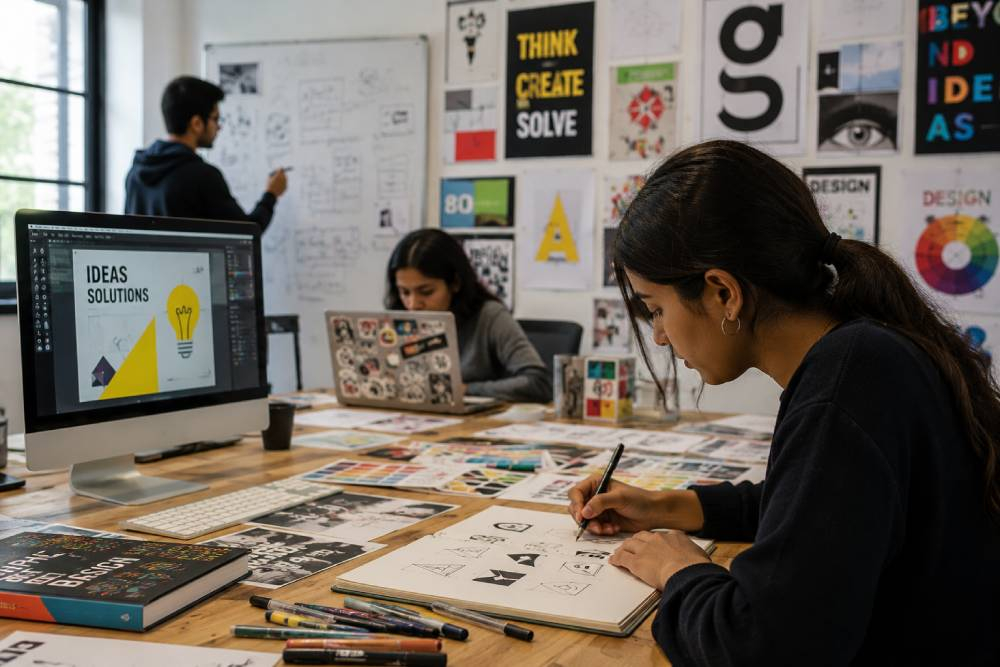
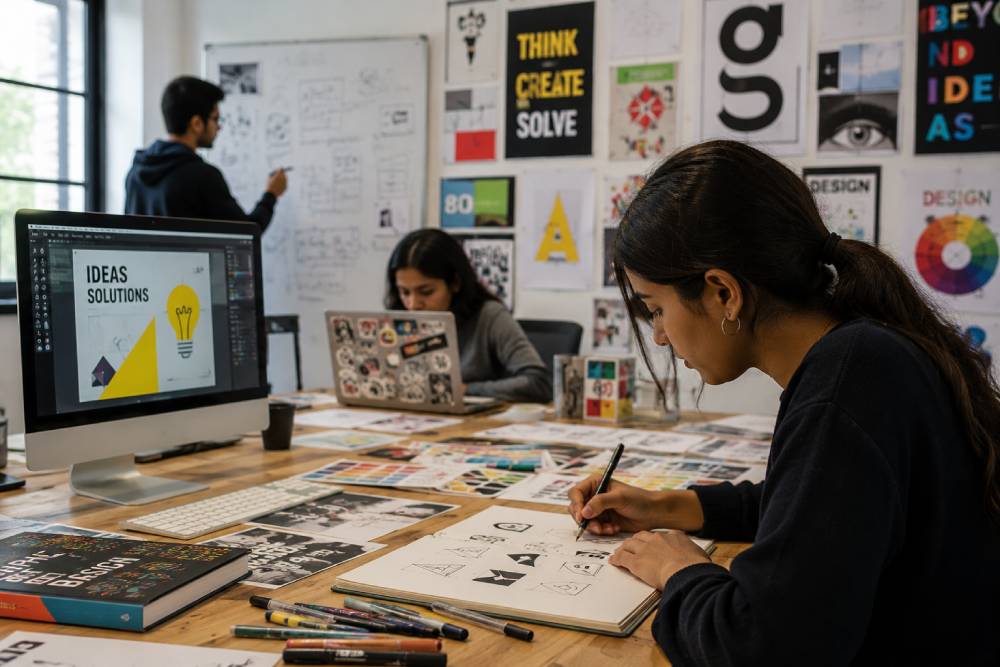
If you’ve ever admired a memorable brand logo, paused to appreciate beautiful packaging, or wondered who designs the websites, apps, advertisements, and social media visuals you interact with every day, you’ve already experienced the power of visual communication. If you’re considering this creative field, one question is likely on your mind: What will I actually study?
Understanding the Viscom course subjects can help you decide whether this programme aligns with your creative interests and career goals. From graphic design and branding to UI/UX, photography, and digital media, each subject develops the creative, technical, and strategic skills needed for careers in design, advertising, branding, media, and digital communication. In this blog, we’ll explore the key subjects, explain why each one matters, and see how they prepare you for the creative industry.
Quick Answer:
Viscom course subjects refer to the creative, technical, and communication-focused disciplines taught in a Visual Communication programme. These include Graphic Design, Typography, Photography, Illustration, Branding, UI/UX Design, Motion Design, Advertising, and Portfolio Development. Together, these subjects prepare students for careers in design, branding, advertising, digital media, and creative technology.
What Will You Learn in a Visual Communication Course?
A Visual Communication course teaches students how to communicate ideas through design, images, typography, branding, photography, digital media, and user experiences. If you’re just beginning to explore this field and want a broader understanding of what a Visual Communication course covers, how it’s structured, and the career opportunities it offers, you can also read our guide on What is a Visual Communication Course and What Will You Learn?
Viscom Course Subjects at a Glance
Students typically study subjects such as:
- Drawing and Sketching
- Colour Studies
- Graphic Design
- Typography
- Photography
- Illustration
- UI Design
- UX Design
- Motion Design
- Branding
- Advertising
- Copywriting
- Packaging Design
- Portfolio Development
- Digital Marketing
The exact subjects covered vary by institution, but most programmes combine creative foundations, digital design, branding, communication strategy, and practical industry projects.
What Are Viscom Course Subjects?
This programme is designed to help students communicate ideas through visuals across print, digital, interactive, and multimedia platforms through a carefully structured Visual Communication syllabus that balances creativity, technology, and communication. Visual communication goes far beyond creating attractive visuals, it involves solving communication challenges, shaping brand identities, and designing meaningful user experiences. If you’d like to explore this broader perspective, read our guide on Visual Communication Design: Exploring Beyond Aesthetics.
Rather than studying isolated design tools, students gradually learn to think like designers by understanding people, solving real-world problems, and developing a professional portfolio. In our four-year Programme in Visual Communication and Digital Design, the curriculum progresses through foundation studies, communication design subjects, advanced digital design, industry internships, and portfolio development, allowing students to apply their learning to real-world creative projects.
While every university structures its curriculum differently, most design course syllabi include a balanced mix of creative fundamentals, design thinking, digital technologies, branding, communication strategy, and professional practice. Over multiple semesters, students build both artistic abilities and industry-ready technical skills for careers in design, advertising, media, and digital products.
| Stage | What Students Learn |
|---|---|
| Foundation | Drawing, Colour Theory, Illustration, Art History |
| Core Design | Graphic Design, Typography, Photography, Editorial Design |
| Digital Design | UI Design, UX Design, Motion Design, Digital Tools |
| Brand Communication | Branding, Advertising, Copywriting, Strategy |
| Professional Practice | Internships, Live Client Projects, Portfolio Development, Grand Project |
Foundation Subjects in a Viscom Course
Every successful designer begins with strong fundamentals, making these design subjects the building blocks of every successful creative career.
The first year introduces students to the language of design communication while strengthening observation, imagination, and artistic expression.
Some important foundation subjects include:
Analytical Drawing and Sketching
Drawing isn’t just about creating beautiful artwork.
It trains students to observe details, understand proportions, improve visual memory, and communicate ideas quickly. Whether you’re designing a brand identity or planning a digital interface, sketching remains one of the most valuable creative skills.
Colour Studies
Colours influence emotions, behaviour, and brand perception.
Students learn colour harmony, contrast, psychology, and practical application so they can make intentional design decisions instead of relying on guesswork.
Illustration and Visual Expression
Illustration encourages experimentation and personal creativity while helping students communicate concepts that words alone cannot express.
It also improves storytelling abilities across advertising, branding, publishing, and digital media.
History of Art and Human Sciences
Great design doesn’t exist in isolation.
Understanding art history, culture, society, and human behaviour enables students to create designs that are meaningful, relevant, and culturally aware.
Core Design Subjects
Once students understand the fundamentals, they move into the core principles of communication design.
These communication design subjects teach students how to organise information, create visual hierarchy, and communicate ideas effectively across print and digital media.
Graphic Design
Graphic Design forms the backbone of almost every creative profession.
Students learn layout, composition, grids, visual balance, branding principles, and digital design workflows that apply across print and digital media.
Typography
Typography is much more than choosing fonts.
Students understand readability, hierarchy, spacing, and how typography influences user experience, brand identity, and communication.
Page Layout and Editorial Design
Whether designing magazines, annual reports, digital publications, or presentations, students learn how to organise content in visually engaging and easy-to-read formats.
Photography
Photography helps designers understand composition, lighting, framing, and visual storytelling while creating original content instead of relying entirely on stock imagery.
Digital Design Subjects for Modern Creative Careers

Today’s designers work across websites, mobile apps, digital campaigns, and interactive platforms.
That’s why the modern design curriculum extends well beyond traditional graphic design to include interactive experiences, digital products, and emerging technologies.
UI Design
User Interface (UI) Design focuses on creating visually appealing digital screens that are intuitive, engaging, and consistent across devices.
Students learn how colours, icons, layouts, buttons, and typography work together to improve digital experiences.
UX Design
User Experience (UX) Design teaches students to understand user behaviour before creating solutions.
Instead of simply making things attractive, students learn to design products that are easy to navigate and enjoyable to use.
Motion Design
Static visuals no longer dominate digital communication.
Motion Design introduces animation principles that bring brands, interfaces, advertisements, and social media content to life.
Computer Graphics and Digital Tools
Students become familiar with industry-standard digital workflows that allow them to transform creative concepts into polished visual communication projects.
Branding, Advertising and Strategic Communication
Many students choose Visual Communication because they dream of working with brands.
Several design subjects focus specifically on strategic communication, helping students connect creativity with business and brand objectives.
Branding
Branding goes beyond logos.
Students learn how brands develop personality, visual identity, consistency, and emotional connections with audiences.
Brand Strategy
Design decisions become stronger when supported by strategic thinking.
Students understand audience research, positioning, communication goals, and how design supports business objectives.
Advertising
Advertising combines creativity with problem-solving.
Students work on campaigns that communicate messages clearly across multiple media platforms while balancing creativity and commercial objectives.
Copywriting
Visual communication isn’t only visual.
Words play an equally important role.
Learning copywriting helps students create stronger campaigns by combining visuals with persuasive messaging.
Advanced Creative Subjects That Build Professional Skills
As students progress through the design curriculum, they begin handling larger projects that closely resemble professional design work.
Some advanced subjects include:
- Art Direction
- Digital Art Direction
- Packaging Design
- Editorial Design
- Marketing
- 3D Blender
- Digital Marketing
- Portfolio Development
- Grand Project
These subjects encourage students to think like creative professionals by combining research, design strategy, collaboration, client communication, and execution into complete design solutions.
Learning Beyond the Classroom
Today’s employers increasingly look for graduates who can combine creativity with digital design skills, strategic thinking, collaboration, and portfolio-based project experience. This is why modern Visual Communication programmes emphasise practical learning alongside classroom instruction.
One of the biggest advantages of a modern creative design course is that learning doesn’t stop inside the classroom.
Students gain practical exposure through:
- Industry internships
- Live client projects
- International workshops
- Project weeks
- Portfolio development
- Cross-functional teamwork
These experiences help students understand professional expectations while building confidence before entering the creative industry. At École Intuit Lab, the curriculum includes two industry internships along with project-based learning and international exposure opportunities.
How Do These Subjects Prepare You for Your Career?

Every subject in the curriculum contributes to a different aspect of becoming a creative professional.
While mastering these subjects is essential, building a successful career also depends on developing the right mix of creative, technical, communication, and problem-solving abilities. To explore these in greater detail, read our guide on Skills Required for a Successful Career in Visual Communication.
By the time students graduate, they have developed skills in:
- Creative problem-solving
- Graphic and digital design
- Typography and layout
- Branding and advertising
- UI and UX design
- Motion design
- Illustration
- Photography
- Portfolio building
- Presentation and communication
- Design strategy
- Team collaboration
These capabilities open opportunities across branding agencies, advertising agencies, design studios, digital product companies, media organisations, publishing houses, startups, and freelance practice.
Choosing the Right Viscom Programme
When comparing different colleges, don’t only look at the subject list.
Ask yourself:
- Does the syllabus evolve from creative fundamentals to advanced industry skills?
- Will I work on real-world projects?
- Are internships included?
- Will I graduate with a professional portfolio?
- Does the programme expose me to branding, digital design, UI/UX, motion design, and communication strategy?
A well-designed curriculum prepares students not only to create attractive visuals but also to solve communication problems creatively.
Key Takeaways
- Viscom course subjects combine creativity, design principles, technology, and communication.
- Students learn Graphic Design, Typography, Photography, Branding, UI/UX, Motion Design, Advertising, and Portfolio Development.
- Practical exposure through internships and live projects helps build industry-ready skills.
- A well-designed curriculum prepares graduates for careers across branding, advertising, digital design, media, and creative technology.
Final Thoughts
Choosing a career in design isn’t simply about learning software or creating attractive visuals. It’s about learning how to observe, think, communicate, and solve problems through design.
The right viscom course subjects, supported by a well-structured design curriculum, gradually transform curious students into creative professionals by combining artistic fundamentals, strategic thinking, digital skills, branding knowledge, and practical industry experience.
If you’re passionate about creativity, storytelling, technology, and making ideas visually meaningful, a well-structured Visual Communication programme can provide the foundation for a rewarding career across today’s fast-growing creative industries.
FAQs
1. What subjects are included in a Viscom course?
A Viscom course typically includes Graphic Design, Typography, Illustration, Photography, Branding, UI/UX Design, Motion Design, Advertising, and Portfolio Development.
2. What is taught in the course?
The course teaches students design principles, visual storytelling, branding, digital media, user experience, and creative problem-solving.
3. Does a Viscom course include UI and UX design?
Yes, most modern Viscom courses include UI and UX Design to prepare students for careers in digital product and interface design.
4. Is Graphic Design a part of the Viscom syllabus?
Yes, Graphic Design is a core subject in the Viscom syllabus and forms the foundation of visual communication.
5. Do the students learn photography?
Yes, photography is commonly included to help students develop composition, lighting, and visual storytelling skills.


