What Does a Creative Aptitude Test Evaluate
Share
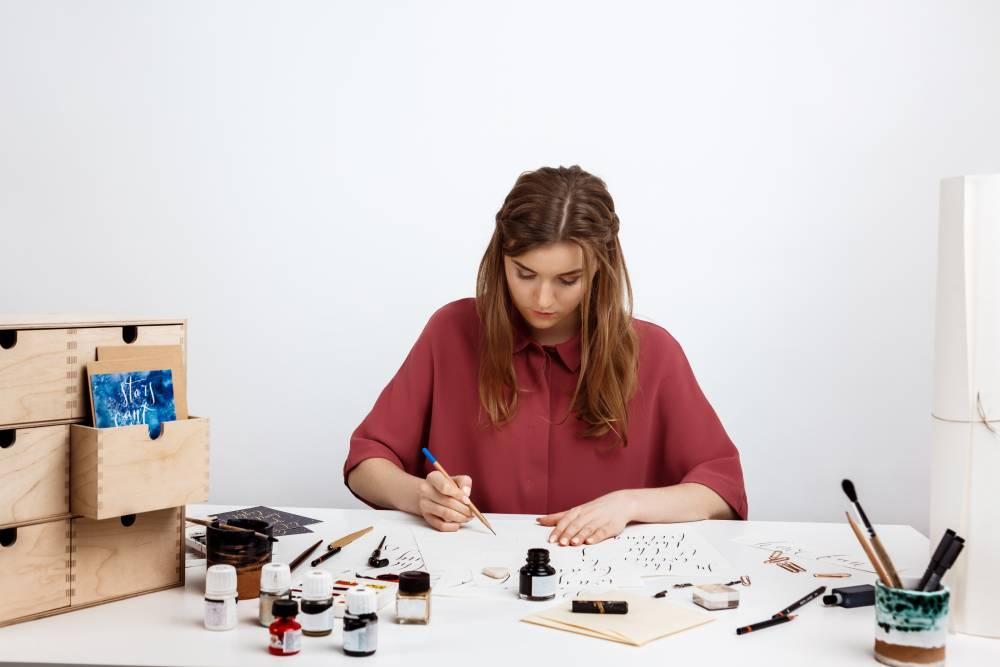
A creative aptitude test evaluates how you observe, think, solve problems, communicate ideas, and approach creative challenges. While sketching may be part of the assessment, design colleges usually focus more on your creativity, logical thinking, visual communication, and ability to develop practical solutions than on artistic perfection.

Think You Need to Be Great at Drawing? That’s One of the Biggest Myths.
Many students begin preparing for design admissions with a single concern:
“I’m not good at drawing. Can I still get into a design college?”
It’s a question that causes unnecessary stress because it starts with the wrong assumption.
Drawing is important in design, but drawing alone doesn’t make someone a good designer.
Imagine two students responding to the same design challenge.
One creates an impressive sketch with beautiful shading but offers no explanation for their idea.
The other presents a simpler sketch, explains the user’s problem, explores different solutions, and justifies why one idea works better than another.
Which response demonstrates stronger design potential?
For most admissions teams, the second response is often more compelling because it reflects the way designers actually think.
Creative aptitude tests are designed to identify students who are curious, observant, and capable of solving problems, not students who can simply produce attractive artwork.
Understanding this difference changes how you prepare and helps you focus on developing the skills that matter most.
What Is a Creative Aptitude Test?
A creative aptitude test is an admission assessment used by design colleges to understand a student’s potential for creative learning.
Unlike traditional academic examinations, these assessments don’t focus on memorising facts or recalling textbook answers. Instead, they evaluate how you respond to unfamiliar situations, interpret visual information, generate ideas, and communicate solutions.
Depending on the admission process, you may encounter activities such as:
- Sketching everyday objects or concepts
- Observation-based exercises
- Visual reasoning questions
- Design problem-solving tasks
- Creative storytelling through visuals
- Portfolio discussions or interviews
Each activity helps admissions teams understand how you think, how you learn, and how you approach creative challenges.
There isn’t always a single correct answer. What matters most is the quality of your thinking and your ability to explain your ideas clearly.
What Skills Does a Creative Aptitude Test Evaluate?

Although every institution has its own admission process, most creative aptitude tests evaluate a similar set of core skills.
| Skill | Why It Matters in Design |
|---|---|
| Creativity | Helps generate original and meaningful ideas. |
| Observation | Builds awareness of people, objects, and environments. |
| Visualization | Enables designers to imagine ideas before creating them. |
| Problem-Solving | Helps develop practical solutions for real users. |
| Logical Reasoning | Supports thoughtful decision-making. |
| Visual Communication | Makes ideas easier to understand. |
| Curiosity | Encourages continuous learning and experimentation. |
These skills work together. Rather than looking for perfection in one area, admissions teams try to understand your overall creative potential.
What Admissions Teams Often Notice in Strong Responses
Many students assume that admissions teams score answers based only on the final drawing.
In reality, they’re often evaluating something much deeper.
When reviewing creative aptitude test responses, they look for evidence of how you arrived at your solution, not just the finished outcome.
The table below highlights the difference.
| Strong Response | Response That Needs Improvement |
|---|---|
| Explores different ideas before choosing one | Uses the first idea without exploring alternatives |
| Explains why design decisions were made | Gives little or no reasoning |
| Focuses on the user’s needs | Focuses only on appearance |
| Demonstrates curiosity and experimentation | Relies on predictable ideas |
| Uses sketches to explain thinking clearly | Produces drawings that are difficult to interpret |
This is why strong responses demonstrate a clear thought process. Admissions teams are often interested in how you analyse the problem, explore alternatives, and justify your decisions, not just the final outcome.
Why Do Design Colleges Assess Creativity?
Creativity is one of the most important qualities evaluated during a creative aptitude test, but it’s often misunderstood.
Many students think creativity means inventing something that has never existed before.
In design, creativity usually means finding a better way to solve a problem.
Imagine This Scenario
You’re asked to redesign a school lunchbox.
One student changes the colour, adds patterns, and makes it look more attractive.
Another student notices that younger children struggle to open the lid, separate different foods, and carry the lunchbox comfortably. Their redesign includes an easy-grip handle, removable compartments, and a spill-resistant locking mechanism.
Both ideas are creative.
However, the second response demonstrates a deeper understanding of the user’s needs.
That is the type of creative thinking admissions teams often value.
What Admissions Teams Usually Look For
Instead of asking,
“Can this student draw well?”
they’re often asking:
- Can this student identify a problem?
- Have they explored more than one idea?
- Does the solution make sense for the user?
- Can they explain their thinking clearly?
A practical idea supported by strong reasoning often demonstrates greater creative potential than an elaborate concept without purpose.
Why Is Observation Such an Important Skill?
Every successful design begins with careful observation.
Before improving a product, service, or space, designers first understand how people use it, where they struggle, and what could be improved.
Creative aptitude tests often include activities that assess this ability.
For example, you may be asked to observe an everyday object for a short period before sketching it from memory.
At first, it appears to be a drawing exercise.
In reality, the assessment is measuring something else.
Did you notice the proportions?
The functional details?
How different parts connect?
Or did you only focus on the overall shape?
Why Observation Matters
Students often start sketching immediately because they’re worried about running out of time.
Experienced designers usually pause first.
They observe carefully before making decisions.
That habit helps them notice details, identify problems, and develop stronger ideas.
A Simple Way to Improve
Choose one everyday object each day, a backpack, chair, water bottle, or mobile phone.
Instead of immediately sketching it, spend two minutes observing:
- What problem does it solve?
- Who uses it?
- What works well?
- What could be improved?
This small exercise gradually strengthens both observation skills and creative thinking.
Why Is Visualization Important in a Creative Aptitude Test?
Visualization is the ability to imagine ideas before they exist. It’s what allows designers to mentally explore different possibilities before deciding on the best solution.
Whether you’re designing a product, a poster, an app interface, or a public space, you first need to picture how different elements will work together. That’s why creative aptitude tests often include exercises that assess spatial awareness and visual thinking.
You may be asked to:
- Complete an unfinished figure
- Rotate shapes mentally
- Draw an object from another angle
- Convert a 2D shape into a 3D form
- Rearrange visual elements into a meaningful composition
These activities aren’t testing artistic talent, they’re assessing how comfortably you can think in visual terms.
What Admissions Teams Want to Understand
A strong response doesn’t always have the most detailed drawing. Instead, it shows that you can:
- Understand relationships between shapes and spaces
- Organise visual information logically
- Translate an idea into a clear visual representation
This ability becomes increasingly important throughout design education because designers regularly work with concepts before creating final outcomes.
Why Is Problem-Solving Central to Design?
If creativity generates ideas, problem-solving determines whether those ideas actually work.
Every design begins with a question.
How can this product be easier to use?
How can this space become more accessible?
How can this interface help users complete a task more efficiently?
Creative aptitude tests evaluate whether you naturally think this way.
Think Like a Designer, Not Just a Student
Many students approach design questions by asking:
“What answer does the examiner want?”
Designers approach the same question differently.
They ask:
- Who is this designed for?
- What challenge are they facing?
- Why does this problem exist?
- Can I improve the experience in a practical way?
This shift in thinking is what separates creative problem-solving from simply completing an assignment.
Example
Imagine you’re asked to design a chair for students who spend long hours studying.
A typical response might focus on colours or appearance.
A stronger response considers posture, comfort, storage, durability, portability, and available space before beginning the sketch.
The second response demonstrates empathy, reasoning, and user-centred thinking, qualities admissions teams actively look for.
Why Does Visual Communication Matter?

Having a creative idea is valuable only if you can communicate it effectively.
Designers regularly present concepts to teachers, clients, teammates, and users. If people cannot understand your idea, even a strong concept may lose its impact.
That’s why creative aptitude tests assess visual communication alongside creativity. If you want to understand how visual communication is applied beyond the admission test, you can also explore what a visual communication course involves and the skills students develop through it.
Visual communication isn’t about creating perfect artwork.
It’s about making your thinking easy to follow.
What Makes a Strong Response?
Imagine two students solving the same design challenge.
The first creates a beautifully shaded drawing but provides no explanation.
The second uses simple sketches with arrows, labels, and short notes to explain how the design works and why each decision was made.
Admissions teams often find the second response more effective because it clearly communicates the thinking process.
A Useful Habit
Whenever you complete a practice question, ask yourself:
“If someone looked only at my sketch, would they understand my idea?”
If the answer is no, improve the communication, not just the drawing.
Is Drawing the Most Important Skill?
Drawing is an important design tool, but it represents only one aspect of the overall assessment.
In reality, admissions teams usually evaluate a combination of abilities, including observation, creativity, reasoning, visualization, and communication.
A simple sketch supported by thoughtful reasoning often demonstrates greater design potential than a highly detailed drawing without a clear purpose.
Instead of asking,
“How can I make this drawing look better?”
Ask,
“Does this drawing explain my idea clearly?”
That single change in mindset often improves the quality of your response.
How to Prepare for a Creative Aptitude Test
Preparing for a creative aptitude test isn’t about memorising answers. It’s about developing habits that strengthen your creative thinking over time.
Here are practical ways to prepare.
Observe Everyday Design
Pay attention to products, packaging, public spaces, websites, and everyday objects.
Ask yourself:
- Why was it designed this way?
- What problem does it solve?
- How could it be improved?
This habit develops observation and analytical thinking.
Solve One Small Design Challenge Every Day
Choose a simple object around you.
It could be a water bottle, school bag, chair, notebook, or mobile stand.
Challenge yourself to improve it.
Generate multiple ideas before selecting one.
This strengthens both creativity and problem-solving.
Sketch to Communicate, Not to Impress
Practice quick sketches that explain ideas.
Don’t worry about making them beautiful.
Focus on clarity.
Remember, sketches are a thinking tool before they become artwork.
Learn Basic Design Principles
Understanding concepts like hierarchy, balance, contrast, alignment, and proportion helps you organise information more effectively.
These principles improve both your sketches and your overall design thinking.
Review Your Own Work
One of the fastest ways to improve is to critique your own responses.
Ask yourself:
- Did I understand the problem?
- Could I have explored another solution?
- Is my reasoning clear?
- Would someone else understand my idea?
Reflecting on your work helps you improve more consistently than simply completing more practice questions.
Common Mistakes Students Make
Knowing what to avoid can be just as helpful as knowing what to practise.
| Common Mistake | Better Approach |
|---|---|
| Focusing only on drawing | Develop creativity, observation, reasoning, and communication together. |
| Jumping into sketching immediately | Spend time understanding the problem first. |
| Using the first idea | Explore multiple possibilities before deciding. |
| Ignoring the user’s needs | Think about who will use the design and why. |
| Creating attractive sketches with little explanation | Communicate your thinking clearly through visuals and brief notes. |
| Practising only a few days before the test | Build creative habits consistently over time. |
Many successful applicants aren’t necessarily the best artists. They’re often the students who think carefully, communicate clearly, and remain curious throughout the creative process.
Developing a Designer’s Mindset
Preparing for a creative aptitude test is about more than securing admission.
It’s the beginning of learning how designers think.
Designers observe before they create.
They ask questions before proposing solutions.
They test ideas, accept feedback, and improve their work through iteration.
Developing these habits now will help you not only during admissions but throughout your design education and professional career.
At Ecole Intuit Lab, this philosophy is reflected in an approach that values curiosity, experimentation, critical thinking, and continuous learning. Rather than expecting applicants to be finished designers, the focus is on recognising creative potential and helping students develop it through studio-based learning, industry exposure, and hands-on projects.
Conclusion
A creative aptitude test isn’t designed to identify the best artist in the room.
It’s designed to identify students who have the curiosity to explore ideas, the observation to understand problems, and the creativity to develop meaningful solutions.
Throughout the assessment, your ideas, reasoning, and approach to solving problems matter just as much as your ability to sketch them.
As you prepare, focus less on producing perfect sketches and more on becoming a thoughtful observer, a curious learner, and a confident problem-solver. These qualities will not only strengthen your performance during the admission process but also support your growth throughout your journey in design.
FAQs
1. What does a creative aptitude test evaluate?
A creative aptitude test evaluates creativity, observation, visualization, logical reasoning, problem-solving, and visual communication. It helps design colleges understand your creative potential rather than your ability to memorise information.
2. Is drawing the most important part of the test?
No. Drawing helps communicate ideas, but admissions teams also evaluate how you think, solve problems, and explain your creative decisions.
3. Can I perform well if I am not good at drawing?
Yes. Many students perform well because they demonstrate strong observation, creative thinking, reasoning, and communication, even if their sketches are simple.
4. How can I improve my creative aptitude?
Observe everyday objects, solve design challenges, sketch regularly, analyse how products are used, and practise generating multiple solutions to the same problem.
5. How long should I prepare?
There isn’t a fixed timeline. Consistent practice over several weeks or months usually produces better results than trying to prepare everything at the last minute.
6. Does a portfolio guarantee admission?
A portfolio showcases your creative journey, but admissions decisions generally consider several factors, including your aptitude, thinking process, and overall performance during the selection process.


