How Do I Crack Design School Personal Interview Questions Without Panicking?
Share


Preparing for a design school interview can feel intimidating, especially when you’re unsure what interviewers expect. The good news is that success isn’t about giving “perfect” answers it’s about communicating your creativity, thought process, passion, and willingness to learn. With the right preparation and mindset, you can confidently answer every design interview question without letting nervousness take over.
Whether you’re applying for undergraduate or postgraduate design programs, this guide explains what interviewers look for, the most common questions, practical preparation strategies, and confidence-building techniques to help you perform your best.
Quick Answer
A design school personal interview assesses your creativity, communication skills, problem-solving approach, motivation for studying design, and ability to explain your work. To crack the interview confidently, prepare your portfolio, practice common interview questions, research the design program, stay updated on design trends, and focus on explaining your creative thought process rather than memorising answers.
Interview Preparation Checklist
| Interview Preparation Checklist | Why It Matters |
|---|---|
| Research the design program | Shows genuine interest |
| Practice common questions | Builds confidence |
| Prepare portfolio explanation | Demonstrates creative thinking |
| Stay updated on design trends | Shows curiosity |
| Practice mock interviews | Improves communication |
| Prepare thoughtful questions | Demonstrates engagement |
Why Does the Personal Interview Matter in Design Admissions?
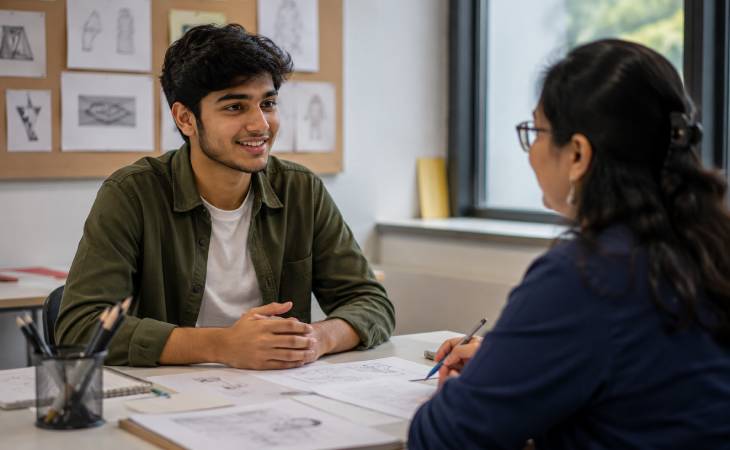
The personal interview is more than just a conversation. It helps admission panels understand the person behind the portfolio, test scores, or entrance exam.
During the personal interview, admission panels look beyond entrance exam scores and portfolios to understand how applicants think, communicate, and approach creative challenges. They evaluate your creative thinking, motivation for studying design, communication skills, curiosity, problem-solving ability, willingness to learn, and awareness of design trends and their real-world applications. If a portfolio is part of the admission process, interviewers also pay close attention to how confidently and thoughtfully you explain your work.
Unlike technical exams, the interview provides an opportunity to showcase your personality, creative mindset, and enthusiasm for learning qualities that cannot always be assessed through written tests.
What Do Interviewers Actually Look For?
Many students assume interviewers expect flawless answers. In reality, they want to understand how you think rather than hear memorised responses.
Rather than expecting perfect answers, interviewers want to understand how you think and whether you’re genuinely interested in pursuing a creative career. Strong candidates communicate the reasoning behind their creative choices, listen carefully, respond honestly, remain open to learning, and express themselves with confidence without appearing overprepared. Demonstrating curiosity and self-awareness often creates a stronger impression than delivering memorised responses.
Common Design Interview Questions You Should Prepare For
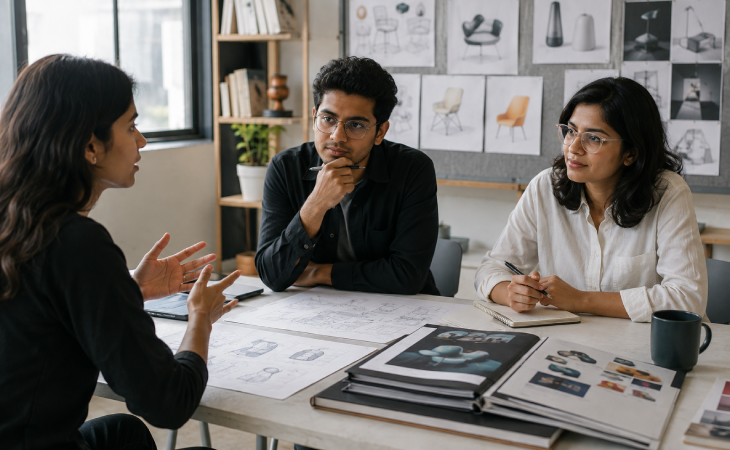
Although each institution asks different questions, several topics recur throughout the admissions process.
Tell us about yourself.
This is often the opening question because it helps interviewers understand who you are beyond your application form. Rather than repeating your resume, briefly introduce your educational background, creative interests, what inspired your interest in design, and your long-term aspirations. Keep your response conversational and focused on experiences that shaped your decision to pursue design.
Why do you want to study design?
Interviewers want to know your motivation.
Avoid giving generic answers such as “I like drawing.” Instead, explain what sparked your interest in design, the types of problems you enjoy solving, how creativity fits your personality, and the experiences that influenced your decision. Authentic, personal examples are usually far more convincing than dramatic or rehearsed stories.
Which design field interests you most?
You don’t need every detail about the industry, but you should understand:
- What the discipline involves
- Why it appeals to you
- What kind of work professionals create
- Skills required for success
If you’re still exploring different creative disciplines, learning more about visual communication and digital design can help you understand what the field involves and whether it aligns with your interests.
Tell us about your portfolio.
Portfolio discussions often reveal how you think.
Your portfolio discussion should go beyond describing the outcome. Explain the original idea behind the project, the research you conducted, the challenges you encountered, the decisions you made throughout the design process, and what you learned from the experience. Interviewers are generally more interested in understanding your thinking than evaluating technical perfection.
If you’re still building or refining your portfolio, our guide to creating a design portfolio can help you structure your projects and present your creative process more effectively.
Who inspires you creatively?
Your inspiration can come from many different sources, including designers, architects, illustrators, filmmakers, photographers, artists, nature, travel, or even everyday observations. What matters most is your ability to explain why these influences inspire you and how they have shaped your creative thinking.
How do you handle criticism?
A good response demonstrates maturity.
For example:
“Constructive feedback helps me improve. I try to understand the reasoning behind suggestions before making revisions.”
Design education involves regular critique sessions, so openness to feedback is important.
Learning how to receive and apply feedback is a skill worth building early. Our guide on getting the most out of portfolio reviews explains how to approach feedback constructively and use it to strengthen your work.
How Should You Prepare Before the Interview?

Preparation reduces anxiety and builds confidence.
Research the Program
Spend time exploring the curriculum, studio-based learning approach, projects, industry collaborations, areas of specialisation, and overall learning environment. Understanding these aspects helps you explain why the program matches your interests and demonstrates genuine preparation during the interview.
Review Your Portfolio Thoroughly
Know every project inside your portfolio.
Many applicants spend considerable time creating their portfolio but overlook preparing how they will discuss it. Be ready to explain why you created each project, what inspired it, the materials or tools you used, how your ideas evolved, and what you might improve if you revisited the project today. Clear explanations often make a stronger impression than polished visuals alone.
Practice Speaking Aloud
Speaking your answers is very different from thinking about them.
Try:
- Mock interviews with friends
- Recording yourself
- Practising in front of a mirror
- Answering random creative interview questions
This improves fluency and reduces hesitation.
Stay Updated on Design
Interviewers may also ask about current topics such as design trends, sustainability, technology, user experience, artificial intelligence in creative industries, or examples of good everyday design. You don’t need expert-level knowledge, but showing curiosity and a willingness to learn demonstrates genuine interest in the field.
What Should You Wear to a Design School Interview?
Although creativity is important, your appearance should reflect professionalism and comfort.
Consider these tips:
- Wear clean, comfortable clothing.
- Avoid overly flashy outfits that distract from your conversation.
- Choose attire that matches your personality while remaining appropriate.
- Ensure your portfolio and documents are neatly organised.
- Arrive well-groomed and on time.
Remember, interviewers are evaluating your ideas and communication skills not expensive clothing.
Communication Tips That Make a Positive Impression

Good communication isn’t about speaking fast or using complicated vocabulary.
Focus on:
- Speaking clearly
- Listening carefully
- Taking a moment before answering
- Maintaining eye contact
- Smiling naturally
- Keeping answers organized
If you don’t understand a question, politely ask for clarification.
That’s better than guessing.
Body Language Matters More Than You Think
Your non-verbal communication also influences first impressions.
Keep these tips in mind:
- Sit comfortably with good posture.
- Avoid crossing your arms.
- Make natural eye contact.
- Use gentle hand gestures.
- Avoid constantly looking down.
- Nod while listening.
- Stay relaxed.
Confident body language often helps reduce nervousness as well.
How Do You Answer Unexpected Questions?
Sometimes interviewers ask unusual or hypothetical questions to understand your thinking process.
For example:
- What would you redesign in your city?
- Describe an object that inspires you.
- If you could solve one everyday problem, what would it be?
- How would you improve this product?
There isn’t always a single correct answer.
Instead of rushing into an answer, take a few moments to think before responding. Explain your reasoning step by step, think aloud if it helps organize your thoughts, and demonstrate curiosity about the problem you’re solving. Interviewers are usually more interested in understanding your thought process than hearing a single “correct” answer.
Interviewers usually value your thought process more than the final answer to a design interview question.
What Questions Can You Ask the Interview Panel?
If the interviewer invites questions, asking thoughtful ones demonstrates curiosity and genuine interest.
You could ask:
- How is project-based learning integrated into the curriculum?
- What opportunities are available for industry collaborations?
- How are portfolio reviews conducted during the program?
- What kinds of internships do students typically pursue?
- How do students receive feedback on creative projects?
Avoid asking questions that can easily be answered by reading the institution’s website.
Common Mistakes Students Should Avoid
Many candidates lose confidence because of avoidable mistakes.
Try not to:
- Memorize scripted answers.
- Interrupt the interviewer.
- Speak negatively about previous experiences.
- Pretend to know something you don’t.
- Rush through answers.
- Ignore your portfolio.
- Forget to ask thoughtful questions if invited.
Being genuine is always more effective than trying to impress.
Confidence-Building Techniques Before the Interview

Feeling nervous before a design school interview is completely normal, even for well-prepared candidates. Rather than trying to eliminate nervousness, focus on managing it so you can communicate your ideas with clarity and confidence. A few simple preparation techniques can make a significant difference in how you perform during the interview.
To build confidence before your interview, consider the following strategies:
- Prepare early: Avoid last-minute revisions by reviewing your portfolio, practicing common interview questions, and organizing your documents in advance. Thorough preparation helps reduce uncertainty and allows you to focus on the conversation rather than worrying about what you might have missed.
- Practice deep breathing: Taking a few slow, deep breaths before entering the interview room can help calm your nerves and improve your concentration. Controlled breathing is a simple yet effective way to manage anxiety.
- Visualize success: Spend a few minutes imagining yourself answering questions confidently, discussing your portfolio naturally, and engaging in a positive conversation with the interview panel. Mental rehearsal can help reduce fear of unfamiliar situations.
- Treat the interview as a conversation: Instead of viewing the interview as a test, think of it as an opportunity to share your creative journey, interests, and ideas. This mindset often helps candidates respond more naturally and confidently.
- Accept that perfection isn’t expected: Every applicant experiences some level of nervousness, and interviewers understand this. If you need a moment to think before answering, take your time. Thoughtful, honest responses usually leave a stronger impression than rushed or rehearsed answers.
Remember, confidence doesn’t come from having perfect answers, it comes from being well prepared, communicating authentically, and demonstrating a genuine willingness to learn. By focusing on your creative process and staying true to your experiences, you can approach your design school interview with greater confidence and composure.
How Can Your Portfolio Support Your Interview?
Your portfolio provides real examples that strengthen your answers.
When discussing projects:
- Explain your design process.
- Discuss research and experimentation.
- Mention challenges.
- Share what you learned.
- Highlight improvements you would make today.
These portfolio interview tips show growth, reflection, and creative thinking.
Key Takeaways
Design interviews are not designed to trick you; they’re meant to understand your creative potential, communication style, and willingness to learn. By preparing your portfolio, practicing common interview scenarios, staying curious about design, and focusing on clear communication, you can approach the interview with greater confidence.
Instead of trying to deliver flawless answers, aim to share your authentic creative journey. Interviewers appreciate thoughtful reasoning, honesty, and enthusiasm far more than rehearsed responses.
Conclusion
Cracking a design school personal interview isn’t about delivering perfect answers, it’s about communicating your creativity, curiosity, and willingness to learn with confidence. By preparing your portfolio thoroughly, practicing common design interview questions, researching the program, and developing clear communication skills, you can approach the interview as a meaningful conversation rather than a stressful test. Interviewers are often more interested in understanding your thought process and creative potential than hearing rehearsed responses.
With consistent practice and the right preparation, every interview becomes an opportunity to showcase your unique perspective and passion for design. Institutions such as Ecole Intuit Lab support this journey through studio-based learning, portfolio development, industry exposure, and collaborative projects that help students build the confidence, creative thinking, and communication skills needed to succeed in both the admission process and their future design careers.
FAQs
1. What is the most common design school interview question?
Most interviews begin with questions about your background, why you chose design, your creative interests, and your portfolio. Interviewers use these questions to understand your motivation, communication skills, and problem-solving approach.
2. How should I prepare for a design school interview?
Research the institution, review your portfolio thoroughly, practice answering common questions aloud, stay updated on design trends, and participate in mock interviews to improve confidence and communication.
3. Do I need a perfect portfolio to clear a design interview?
No. Interviewers usually value your creative process, curiosity, and ability to explain your work more than having flawless projects. A thoughtful portfolio discussion often matters more than perfection.
4. How can I stop feeling nervous before my interview?
Practice regularly, prepare early, use deep breathing techniques, visualize a successful conversation, and remember that interviewers want to understand your ideas not catch you making mistakes.
5. What qualities do interviewers look for in design students?
Interviewers typically assess creativity, curiosity, communication, problem-solving ability, openness to feedback, motivation for studying design, and the ability to explain design decisions clearly.


