Scope of Visual Communication: Career Paths, Industries and Future Opportunities
Share

Have you ever wondered who designs the apps you use every day, the billboards that grab your attention, the packaging that influences your buying decisions, or the visuals behind your favourite social media campaigns? Every image, interface, animation, and brand experience is thoughtfully created by creative professionals who use design to communicate ideas effectively. In short, visual communication offers career opportunities across advertising, branding, UI/UX design, motion graphics, technology, media, education, and e-commerce making it one of India’s fastest-growing creative fields.
As businesses increasingly compete through digital experiences and compelling storytelling, the scope of visual communication has expanded far beyond traditional graphic design. Today, graduates can build careers across branding, advertising, UI/UX design, motion graphics, content creation, and emerging technologies. In this blog, we’ll explore career paths, industries hiring design professionals, and the exciting opportunities shaping the future of this creative field.
Quick Answer:
In simple terms, this creative discipline extends across industries such as advertising, branding, digital marketing, technology, entertainment, education, healthcare, publishing, and e-commerce. Graduates can pursue careers in graphic design, UI/UX design, motion graphics, branding, illustration, packaging design, and emerging fields like AI-assisted design and immersive media.
What is Visual Communication?
Visual communication is the process of conveying ideas, messages, and information through visual elements such as typography, colour, images, illustrations, layouts, motion, and digital interfaces. It combines creativity with strategy to help audiences understand information quickly and effectively.
Unlike traditional art, this discipline focuses on solving communication challenges.Whether designing a mobile application, creating a brand identity, developing an advertising campaign, or producing an animated explainer video, the goal remains the same: to communicate clearly while creating engaging experiences.
Today, design professionals work across both print and digital platforms, creating experiences for businesses, brands, and organisations across industries. This versatility makes the field both dynamic and future-focused.
If you’re exploring this field further, read our comprehensive guide on What is a Visual Communication Course? to understand the curriculum, specialisations, and career opportunities.
Why is the Scope of Visual Communication Growing?

The demand for skilled design professionals has increased significantly over the past decade because nearly every industry now depends on visual content to connect with its audience.
This growth reflects the broader shift towards digital-first communication, where businesses increasingly rely on engaging visual content to connect with their audiences across platforms.
As the industry evolves, visual communication design goes beyond aesthetics, focusing on strategy, user experience, branding, and meaningful communication that creates lasting impact.
Why is Visual Communication in High Demand?
Professionals trained in visual communication are in demand because businesses rely on digital experiences, branding, content marketing, UI/UX design, and immersive technologies to communicate effectively with audiences.
- Businesses need strong branding to stand out in competitive markets.
- Social media platforms require engaging visual content every day.
- Websites and mobile apps rely on intuitive user interface and user experience design.
- Digital marketing campaigns perform better with compelling graphics and videos.
- Educational platforms use visual storytelling to simplify complex concepts.
- Emerging technologies like AR, VR, AI, and immersive media are creating entirely new design opportunities.
As digital experiences become central to everyday life, professionals with strong communication skills are becoming valuable across multiple sectors, making visual communication one of the fastest-growing creative career fields.
Career Paths in Visual Communication
One of the biggest advantages of studying this course is the wide variety of career options available. Students are not limited to one profession but can specialise based on their interests, strengths, and long-term career goals.
Want to explore where this field can take you? Discover what a career in visual communication design looks like across branding, advertising, UI/UX, media, and digital design industries.
Graphic Designer
Graphic designers create visual assets for brands, advertisements, websites, packaging, publications, and marketing campaigns. They combine typography, colour, imagery, and layout to communicate ideas effectively.
UI/UX Designer
With digital products becoming part of everyday life, UI/UX design has become one of the most in-demand careers in the creative design industry. These professionals design user-friendly websites, mobile applications, dashboards, and digital experiences that are both functional and visually appealing.
Brand Identity Designer
Brand designers develop logos, visual systems, colour palettes, typography, and brand guidelines that help organisations establish a consistent identity across platforms.
Motion Graphics Designer
Motion designers create animated visuals for advertising, social media, films, corporate presentations, and digital campaigns. Their work combines design, storytelling, and animation.
Illustrator
Illustrators produce custom artwork for books, editorial publications, advertising campaigns, educational materials, gaming, and digital platforms.
Packaging Designer
Packaging designers create product packaging that balances functionality, sustainability, and visual appeal while strengthening brand recognition.
Visual Content Creator
With the rapid growth of digital marketing, visual content creators develop graphics, videos, animations, and social media content for brands, agencies, and content platforms.
Art Director
Experienced visual communication professionals often progress into leadership roles such as art directors, where they guide creative teams and oversee the visual direction of campaigns and projects.
What Is the Salary Scope in Visual Communication?
Salaries in visual communication vary depending on specialisation, location, experience, portfolio quality, and industry. Professionals working in areas such as UI/UX design, branding, motion graphics, product design, and digital experiences often have strong long-term career growth opportunities. As designers gain experience and build specialised skills, they may progress into senior creative, leadership, or strategic design roles across agencies, startups, and global organisations.
Industries That Hire Visual Communication Professionals

One reason this field continues to grow is that almost every industry actively hires creative professionals to strengthen branding, customer experiences, marketing, and digital communication.
Advertising and Branding
Advertising agencies constantly seek creative professionals who can build memorable campaigns, brand identities, and marketing collateral.
Digital Marketing
Businesses invest heavily in visual content to improve engagement across websites, social media, email campaigns, and online advertising.
Media and Entertainment
Film production houses, OTT platforms, television networks, gaming companies, and animation studios require designers for promotional content, title sequences, graphics, and visual storytelling.
Technology Companies
Software companies and startups hire UI/UX designers, product designers, and visual designers to improve customer experiences across digital products.
Publishing and Editorial
Magazines, newspapers, educational publishers, and digital media companies employ designers to create layouts, infographics, illustrations, and visual narratives.
E-commerce and Retail
Online retailers depend on high-quality product visuals, packaging, advertising creatives, and user-friendly shopping experiences to attract customers.
Education
Educational institutions increasingly use visual communication for digital learning materials, interactive content, presentations, and online courses.
Government & Public Sector
Many government departments, museums, public awareness campaigns, smart city initiatives, tourism boards, and cultural organisations increasingly use visual communication professionals to design public information systems, educational campaigns, exhibitions, and digital experiences.
Future Opportunities in Visual Communication
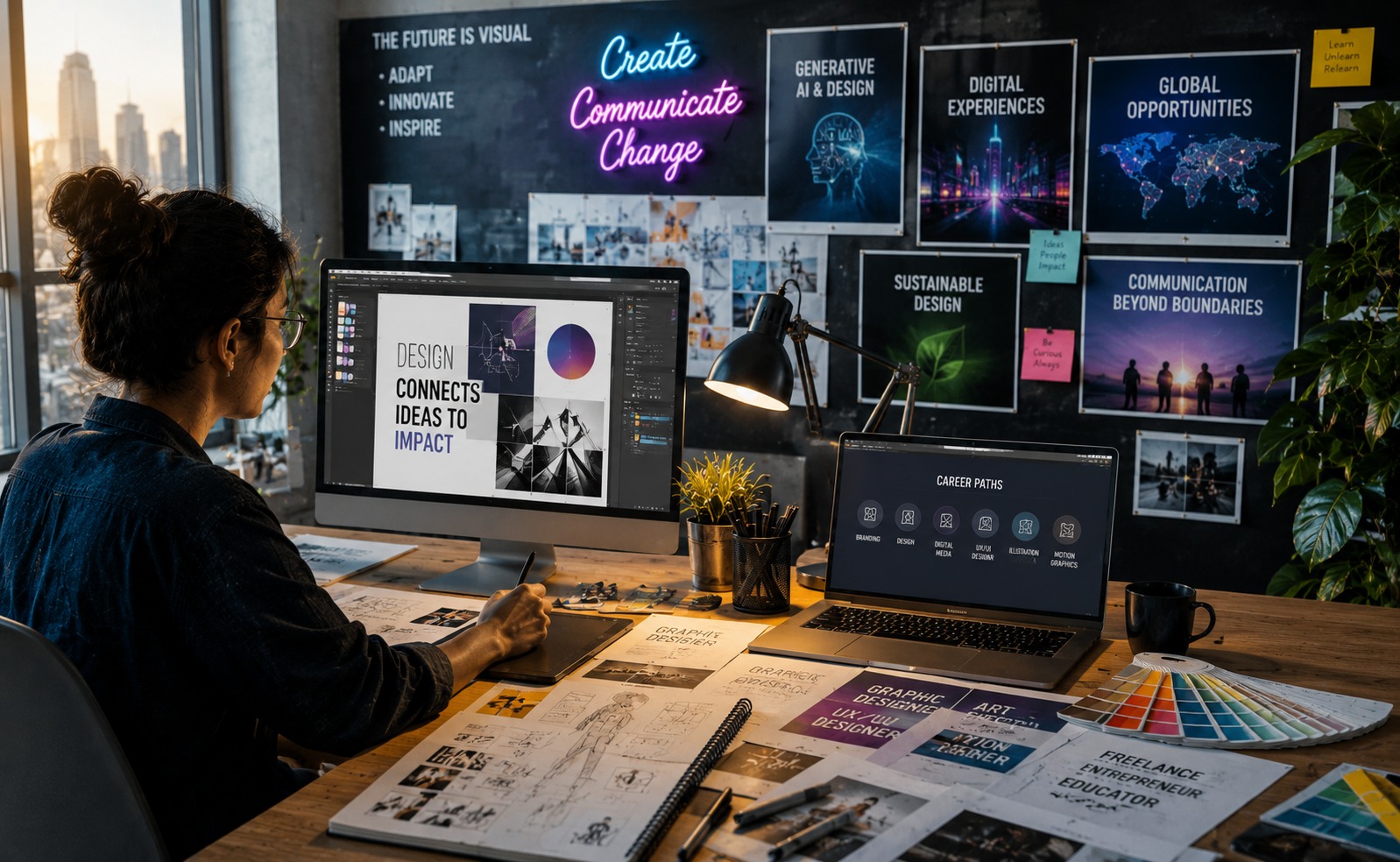
The future of this creative field looks incredibly promising as technology continues to reshape how people consume information. As businesses invest more in digital experiences, the demand for skilled design graduates continues to rise.
Several emerging fields are opening exciting career opportunities:
AI-Assisted Design
Artificial intelligence is transforming creative workflows by automating repetitive tasks and enhancing productivity. Rather than replacing designers, AI is helping automate repetitive tasks while increasing the demand for professionals who combine creativity, strategic thinking, and design expertise with emerging technologies.
Augmented Reality (AR) and Virtual Reality (VR)
Immersive technologies are creating demand for designers who can build interactive environments, spatial experiences, and digital interfaces for education, entertainment, healthcare, and retail.
Experience Design
Businesses increasingly focus on delivering seamless customer journeys across digital and physical touchpoints, making experience design an important career path for design graduates.
Data Visualisation
As organisations generate more data than ever before, professionals who can transform complex information into clear, engaging visual stories are becoming increasingly valuable.
Sustainable Design
Companies are prioritising environmentally responsible packaging, branding, and communication strategies, creating opportunities for designers with sustainability-focused thinking.
The future belongs to professionals who combine creativity with technology, research, storytelling, and problem-solving skills.
Design for AI Interfaces
As AI-powered applications become increasingly common, designers are needed to create intuitive interfaces, conversational experiences, ethical visual systems, and human-centred interactions that make AI tools easier and more accessible for users.
Skills You Need to Build a Successful Career
While creativity is important, employers also look for practical and strategic abilities.
Some of the most valuable skills include:
- Visual storytelling
- Typography and layout design
- Colour theory
- Branding fundamentals
- User-centred design
- Design thinking
- Motion graphics
- Digital illustration
- UI/UX principles
- Communication and collaboration
- Problem-solving
- Adaptability to emerging technologies
Building a strong portfolio through real-world projects is equally important, as it demonstrates technical expertise, creative thinking, and readiness for creative design roles across industries.
Along with building a strong portfolio, it’s equally important to develop the skills required for a successful career in visual communication that employers actively seek in creative professionals.
Why Building a Portfolio Matters
Employers evaluate portfolios to understand how candidates solve design problems, communicate ideas, and apply creative thinking in real-world scenarios. A portfolio that showcases diverse projects, research, process, and final outcomes often carries as much weight as academic qualifications during recruitment.
How to Prepare for a Career in the Creative Design Industry
If you want to build a career in branding, digital design, UI/UX, motion graphics, or visual storytelling, choosing a programme that combines design fundamentals with real-world industry exposure can help you develop both creative confidence and a professional portfolio. The Undergraduate Programme in Visual Communication at Ecole Intuit Lab is designed to help students build practical skills through studio-based learning, industry-led projects, and portfolio development for diverse creative careers.
Key Takeaways
- Visual communication combines creativity with problem-solving to communicate ideas visually.
- Career opportunities include graphic design, UI/UX, branding, motion graphics, packaging, illustration, and content creation.
- Professionals work across advertising, technology, media, education, healthcare, publishing, and e-commerce.
- Emerging fields like AI-assisted design, AR/VR, experience design, and data visualisation are expanding career opportunities.
- A strong portfolio, practical projects, and design thinking skills are essential for long-term career growth.
Final Thoughts
The scope of visual communication is no longer limited to graphic design or print media. Today, careers in this field span technology, entertainment, advertising, education, healthcare, e-commerce, and emerging digital experiences. As organisations increasingly rely on visual storytelling to connect with audiences, the demand for skilled creative professionals continues to grow.
Whether you aspire to become a graphic designer, UI/UX designer, motion graphics artist, brand strategist, illustrator, or creative director, a career in this field offers diverse opportunities that combine creativity with real-world impact.
If you’re someone who enjoys solving problems creatively, expressing ideas visually, and shaping meaningful experiences, this creative discipline can open doors to a career that is both fulfilling and future-ready. The opportunities are expanding and this could be the perfect time to begin your journey.
FAQs
1. Is visual communication a good career?
Yes. This field offers diverse career opportunities across advertising, branding, UI/UX, digital marketing, media, technology, and many other industries.
2. What jobs can I get after studying visual communication?
Graduates can pursue careers as graphic designers, UI/UX designers, brand identity designers, motion graphics designers, illustrators, packaging designers, visual content creators, and art directors.
3. Which industries hire visual communication professionals?
Creative professionals are hired across advertising, branding, technology, media, entertainment, education, healthcare, publishing, finance, and e-commerce.
4. What skills are required for a successful career in visual communication?
A successful career in this field requires skills such as visual storytelling, typography, branding, design thinking, UI/UX, motion graphics, communication, and problem-solving.


