What is Digital Product Design and Why is Everyone Talking About It?
Share

What is Digital Product Design?
Do you spend hours on apps like Instagram, Snapchat, TikTok, or your favourite mobile game, utterly absorbed in the experience? Have you ever paused and thought, “I wish this feature were here,” or “This app is so easy and intuitive to use”? That moment of frustration or delight isn’t magic, it’s the result of Digital Product Design.
This field is the discipline of creating and improving the digital tools we use every single day, the mobile applications, websites, software interfaces, and interactive experiences that shape modern life. The entire process focuses on making digital products not just aesthetically pleasing, but fundamentally useful, usable, and enjoyable for real people.
The digital world is exploding. Every business, from a local shop to a billion-dollar startup, needs a flawless digital presence. This massive demand means companies are desperately seeking designers who can ensure their products solve real problems for real users. This is why it has emerged as a high-demand, high-impact career that blends creativity with logic. It’s a field built on empathy and innovation.
If you’re a 12th-grade student who loves both the creative arts and the logic of technology, and you dream of building the next big app without the burden of complex programming languages, this post is your map. We’ll explore the core, non-coding skills you’ll master in a Digital Product Design undergraduate course, proving that the future of tech is designed, not just coded.
Decoding Digital Product Design
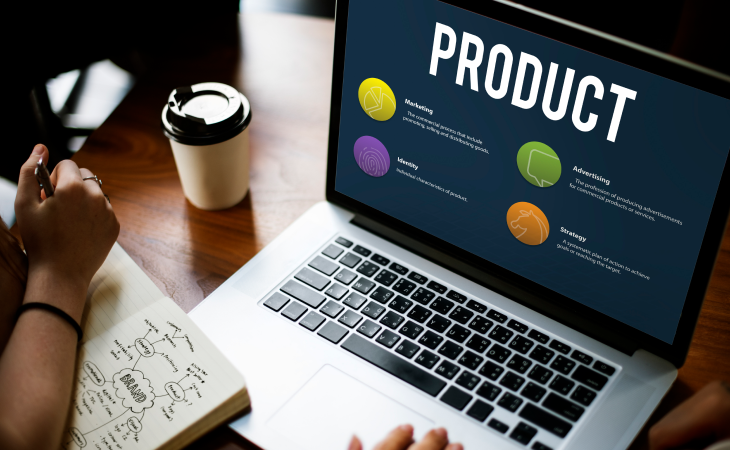
More Than Just Pretty Pictures
A common misconception is that Digital Product Design is the same as graphic design. While aesthetics are important, this is fundamentally a problem-solving and strategic discipline.
What does a digital product designer do?
Think of it this way: a Graphic Designer creates a beautiful poster (a single communication). A Digital Product Designer creates the entire experience of an app or website. They are responsible for answering questions like: How will a user navigate this app? Is the information easy to find? What is the user trying to accomplish, and how can we make that process effortless? It’s about psychology, structure, and strategy, not just pixels and colours.
The Product Mindset
To be a Digital Product Designer is to adopt a Product Mindset. This involves viewing every digital tool as a living product with a constant life cycle. It is not a one-and-done process, it’s a loop designed for continuous improvement:
Research, Design, Test, Launch, Literate
A degree, like the 4-year Bachelor’s Programme in Digital Product Design offered at institutions such as École Intuit Lab (a leading institute of design), directly trains you to manage this entire life cycle. The curriculum is focused on conceptual and technical training at an advanced level, preparing you to become a knowledgeable and functional UI/UX designer ready for the industry.
Take the first step toward your design career, Apply Now.
The Career Explained
It is a high-demand career that blends creativity and logic to build the apps and websites we use daily. It focuses on User-Centred Design (UCD) and involves two main areas: UX (User Experience), which is the architectural blueprint and flow of the product, and UI (User Interface), which is the final visual design. As a professional, you act as the Problem Solver, focusing on research, wireframing, and visual design using tools like Figma, making it the perfect path to building digital products without needing hardcore coding.
The Core Skills of a Digital Product Design UG Course

The great news for students who are more creatively or strategically inclined is that the focus of this course is on human-centric skills and design methodology. You will learn to use cutting-edge design software, not coding languages.
User-Centred Design (UCD): The Foundation
What it is: This is the most critical pillar of the field. User-Centred Design is the practice of putting the target user at the very centre of the design and development process. You don’t design for yourself, you design for the person who will actually use the product.
Skills Learned (The Detective Work):
- Conducting User Interviews: Learning how to ask the right questions to understand users’ pain points and needs.
- Creating User Personas: Building detailed profiles of your ideal users based on research data.
- Mapping User Journeys: Outlining every step a user takes to accomplish a goal in the app, identifying points of friction or confusion.
This part of the course is a lot like psychology and detective work, where empathy is your most powerful tool.
UX Design: The Architecture
What it is: UX stands for User Experience. It’s the overall feeling and structure of a digital product. UX design is the blueprint that defines how the product works, focusing on flow and structure.
Skills Learned (The Blueprint):
- Information Architecture (IA): Strategically organising content so users can find what they need easily and intuitively.
- Wireframing: Creating a low-fidelity blueprint skeleton of an app or website using simple boxes and lines to define structure and functionality, long before visuals are applied.
- Prototyping: Building a clickable, interactive mock-up of the app to test its flow and gather feedback before any actual coding begins.
UX is all about logic and clarity, making sure the product works efficiently and makes sense.
UI Design: The Visual Language
What it is: UI stands for User Interface. This is what the user sees and interacts with. It includes all the visual elements: buttons, icons, typography, colours, layout, and visual branding.
Skills Learned (Where Creativity Meets Consistency):
- Visual Hierarchy: Using size, colour, and placement to guide the user’s eye to the most important elements.
- Design Systems: Creating a set of reusable components and guidelines to ensure a product is consistent, scalable, and on-brand across every screen.
- Software Proficiency: Mastering industry-standard tools like Figma or Sketch, which are used to design and prototype high-fidelity interfaces.
This is where your creativity meets consistency. At an institute like École Intuit Lab, you’ll engage in studio classes and real-world projects that involve learning these tools, coupled with an international curriculum and mandatory internships for practical exposure.
Ready to turn your passion for tech and creativity into a professional skill? If you love figuring out why apps work, making things look great, and are looking for a career with a global perspective, exploring an accredited Digital Product Design UG course might be your perfect next step. École Intuit Lab offers a dynamic environment that promotes individuality and creativity to nurture your design journey. Keep reading to see why this path is the future!
Why This Path is Perfect for You

The Creative-Tech Sweet Spot
As industries become increasingly digital, strong design skills are no longer optional for creative careers. This clearly explains why digital design courses are mandatory today..
Many students feel forced to choose between a creative career (art, writing, design) and a high-paying, future-proof career in tech (engineering, coding).
Digital Product Design removes this dilemma. It’s the ultimate sweet spot. It is the ideal career for students who:
- Love logic and research, but don’t want to code.
- Are creative and artistic but want their work to have a clear, functional purpose.
- Are driven by empathy and a desire to make people’s lives easier.
Design Without the Code Burden
This is the key selling point. In a Digital Product Design UG course, the main focus is on the design methodology research, strategy, wireframing, and visual creation. While you may have an introductory module on coding (like HTML/CSS basics) to help you understand the technical constraints when speaking to developers, your role is not to write complex algorithms.
You become the indispensable bridge between the user and the developer, armed with design tools and a deep understanding of human behaviour, freeing you from the complex programming languages that often overwhelm creative individuals.
High Earning Potential
The massive and accelerating digital transformation across all industries has made skilled Product Designers some of the most sought-after professionals globally. According to LinkedIn, UX roles are among the fastest-growing in India.
This high demand translates directly to excellent career stability, growth, and high earning potential. Companies know that good design directly impacts their revenue and customer loyalty, making your skills a critical asset for any organisation. Graduates of the 4-year program at École Intuit Lab, for instance, are equipped for these lucrative career paths, having the opportunity for two industry internships and an international curriculum to prepare them for global roles.
Recap and Final Thought
This is more than just a job, it is the future of innovation. It’s a powerful discipline that blends the rigour of psychology, the structure of technology, and the flair of art. It’s a career built on understanding, empathy, and the relentless pursuit of making the digital world a better, more user-friendly place. If you are creative, logical, and want to build the future of technology without getting lost in the code, this is your field.
Don’t just use the next billion-dollar app, design it. The world needs thoughtful, empathetic designers who can translate complex problems into intuitive solutions. If the idea of creating seamless, beautiful, and highly functional digital interfaces excites you, it’s time to stop wondering and start exploring a Digital Product Design degree today. Your design journey begins now.
FAQs
1. How is Digital Product Design different from graphic design?
Graphic design focuses on visuals, while this course designs the entire user experience and structure of a digital product.
2. What tools do Digital Product Designers use?
They primarily use tools like Figma, Sketch, and prototyping platforms to design and test digital interfaces.
3. Is digital product design a good career?
Yes, it is a high-demand, high-growth career path with excellent salary potential, blending creativity, logic, and technology.
4. Will AI replace product design?
No, AI will be a powerful tool for automation, but human designers’ empathy, context, and creative problem-solving are irreplaceable.
5. What jobs can a Digital Product Design course get you?
Top jobs include UX Designer, UI Designer, UX Researcher, Product Designer, and Interaction Designer, across nearly all industries.