What is Animation and Motion Design, and How Does it Work?
Share
Are you fascinated by the magic of animated films, the sleek visuals in a video game, or the catchy, kinetic graphics that pop up in advertisements and on your favorite social media feeds? If you’ve ever dreamt of bringing characters to life, making static images move, or crafting stunning visual effects, then you’ve stumbled upon the right place.
Animation and Motion Design are creative disciplines that use movement to communicate stories and information. While Animation focuses on character-driven narratives and cinematic storytelling, Motion Design (or Motion Graphics) applies graphic design principles to moving elements like text and shapes for branding and communication.
From global cinema to digital ads, these skills power today’s visual world. This guide breaks down how these disciplines work and what you’ll learn in a professional undergraduate design course to turn your passion into a career.
What is the core difference between Animation and Motion Design?
Animation tells a story, while Motion Design explains an idea. Animation focuses on character performance and narrative, whereas Motion Design uses graphic design in movement to communicate information or branding (like a tech explainer video).
To understand better, let us see what animation and motion design mean in detail:
1. What is Animation?
Animation is the art of giving the illusion of movement to a sequence of static images, drawings, or models. It is primarily focused on storytelling and character performance.
- Animation is the art of giving the illusion of movement to a sequence of static images, drawings, or models. It is primarily focused on storytelling and character performance.
- Focus: Narrative, character development, world-building, and expressive movement.
- Examples: Anime series, cartoons, ad films and stop-motion films.
- The Basics: Animators use techniques to manipulate images frame-by-frame, following core principles like squash and stretch, timing, and anticipation to make it look organic and believable.
2. What is Motion Design (Motion Graphics)?
Motion Design is the practice of visually communicating ideas using graphic design principles and movement. It’s essentially graphic design that moves.
- Focus: Conveying information, illustrating concepts, enhancing branding, and creating sleek, impactful visual experiences.
- Examples: Explainer videos, title sequences for TV shows, kinetic typography, animated logos, and lower-thirds in social media videos, news broadcasts, and presentations etc.
- The Basics: Motion designers focus on the movement of abstract elements like text, shapes, logos, and charts to clarify or beautify a message.
In simple terms: Animation tells a story, Motion Design explains an idea. Both are essential skills you’ll master in a comprehensive program.
How Do Animation and Motion Graphics Work? The Core Fundamentals
The fundamental principles that govern both animation and motion design are rooted in physics and visual perception.
1. 2D Animation Fundamentals (The Classic Approach)
2D animation is what most people think of, drawings that move. The process, whether done traditionally or digitally, relies on a few key concepts:
- Keyframes and In-Betweens: A Keyframe defines a major change in movement (e.g., the start and end position of a jump). The In-Betweens are the frames that fill the gap to create a smooth transition.
- The 12 Principles of Animation: Developed by Disney legends, these principles (like Squash and Stretch, Anticipation, Follow-Through) are the rules that make animation look natural and engaging.
- Frame Rate: Animation typically runs at 24 frames per second (fps) for film, though some styles use 12 fps (“on twos”) for a choppier, more stylistic look.
2. 3D Animation Basics
3D animation is done in a digital space, creating a virtual world with depth. It involves a detailed pipeline:
- Modeling: Creating the character, object, or environment’s shape (like digital sculpting).
- Texturing: Applying colors, patterns, and surface details (like skin, metal, wood) to the model.
- Rigging and Skinning: Creating a digital skeleton (Rig) inside the model, with controls, so the animator can pose and move it easily.
- Animation: Using the rig controls to set keyframes for movement, much like a puppeteer.
- Lighting and Rendering: Setting up virtual lights and processing the final images (Rendering) to create realistic shadows, reflections, and depth.
3. Motion Graphics Workflow
Motion graphics leverage design software to create dynamic compositions:
- Design & Storyboarding: Conceptualising the look and movement of graphic elements.
- Keyframing: Animating properties like position, scale, rotation, and opacity to control the timing and flow of text and shapes.
- Easing: Adjusting the acceleration and deceleration of movement to make it feel smooth and professional, rather than robotic (“ease in” and “ease out”).
What Essential Skills Will You Gain in an Animation & Motion Design UG Course?
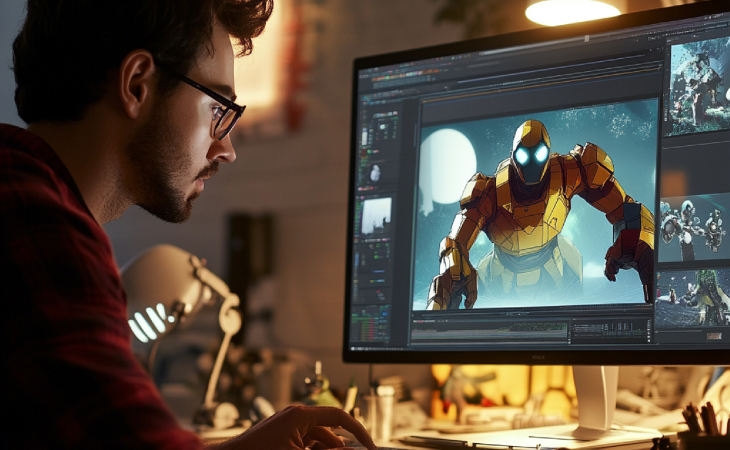
A Bachelor’s in this field is designed to turn your passion into a profession by building a robust skill set across various disciplines. Here’s a look at the core competencies you’ll develop:
1. Visual Arts and Storytelling
- Drawing and Conceptualisation: Mastering fundamental drawing skills, composition, colour theory, and visual communication.
- Storytelling in Motion Design: Learning to structure a narrative, script a video, and use motion to guide the viewer’s eye and evoke emotion.
- Character Design: Creating compelling, expressive characters that are ready for animation.
2. Core Software Proficiency (Animation Software for Beginners)
You’ll gain hands-on experience with industry-standard tools:
| Domain | Key Software |
|---|---|
| Motion Graphics/Compositing | Adobe After Effects (the industry standard), Adobe Illustrator, Photoshop, Figma |
| 2D Animation | Toon Boom Harmony, Adobe Animate |
| 3D Animation | Autodesk 3DSMax, Blender, Cinema 4D (often for motion graphics) |
| Sculpting/Modeling | ZBrush |
3. Visual Effects (VFX) Basics: Compositing and Visual Effects
VFX is the magic that puts impossible scenes on screen, think of explosions, creatures, or entire cities.
- Compositing: The process of combining multiple visual elements (like live-action footage, 3D models, and matte paintings) into a single, seamless image. Adobe After Effects is a key tool for this.
- Green Screen/Chroma Keying: Learning to isolate and replace backgrounds.
- Tracking and Rotoscoping: Techniques for adding digital elements to live footage convincingly.
Why is This Course Ideal for 12th-Grade Students in India?

India’s animation, gaming, and digital content industries are expanding rapidly.
Key Benefits
- High demand: Skilled artists are needed across media, advertising, gaming, and ed-tech.
- Global exposure: Indian studios work on international projects, and remote work is common.
- Creative satisfaction: You get paid to create, design, and tell visual stories.
- Future-ready skills: Motion and animation are essential in digital-first industries.
Explore details about the Animation and Motion Design Undergraduate course after 12th with Ecole Intuit Lab
Career Opportunities After Studying Animation & Motion Design
Graduates can explore a wide range of creative roles, including:
- 2D or 3D Animator
- Motion Graphics Designer
- VFX Artist
- Game UI UX Artist
- Video Editor and Compositor
- UI Motion Designer
With strong portfolios, many professionals also work as freelancers or remote artists for global client.
Why Choose Ecole Intuit Lab for Animation and Motion Design?
Industry-Focused Curriculum
A 4-year undergraduate programme designed around studio learning, real-world projects, and portfolio development aligned with current animation and motion design industry needs.
Learn from Industry Professionals
Mentorship from 160+ practising artists, designers, and creative entrepreneurs who bring real market experience into the classroom.
Global Exposure
Access to an international learning ecosystem with campuses in Mumbai, Kolkata, New Delhi, Bengaluru, and Paris, along with global workshops and exchange opportunities.
Mandatory Internships
Two compulsory internships in India or abroad to gain hands-on industry experience and professional exposure.
Strong Placement Outcomes
A proven track record with up to 98% placements within six months, preparing students for careers in animation studios, digital agencies, gaming, and media companies.
Ready to Bring Your Imagination to Life?
If you’re ready to transform your passion for art and technology into a high-demand, high-impact career, a focused UG Programme is your best first step. It provides the structured learning, industry-standard tools, and portfolio development necessary to succeed.
Don’t wait to start your creative journey!
Apply Now! for the Animation and Motion Design Programme with Ecole Intuit Lab and shape the future of digital content!
Conclusion
Animation and Motion Design offer one of the most exciting and evolving career paths today. By understanding the fundamentals of 2D/3D animation, the communicative power of motion graphics, and the technical artistry of visual effects, you can become an essential part of the digital content revolution. Now is the perfect time to enrol, learn the craft, build your portfolio, and start animating your dream career!
FAQs
1. Is animation and motion design a good career option in India after 12th?
Yes, animation and motion design offer strong career opportunities in India due to the growing demand in films, gaming, digital marketing, OTT platforms, and ed-tech industries.
2. Which software is taught in animation and motion design UG programmes in India?
Most undergraduate programs teach industry-standard software, including Adobe After Effects, Photoshop, Illustrator, Blender, Maya, Toon Boom Harmony, Figma and Cinema 4D.
3. What career roles can I pursue after completing an animation and motion design degree?
Graduates can work as 2D/3D animators, motion graphics designers, VFX artists, game artists, video editors, or UI motion designers.
4. What is the eligibility to study animation and motion design in India?
Students who have completed 12th grade from any stream are eligible, with most institutes assessing creativity, basic aptitude, or portfolio rather than academic marks alone.
5. What is the average salary for animation and motion design graduates in India?
Entry-level professionals in animation and motion design typically earn between ₹3–6 LPA, with higher growth potential based on skills, portfolio quality, and experience.