What Is an Interior Design Course? Complete Career Guide for Students After 12th
Share

What Is an Interior Design Course? Complete Career Guide for Students After 12th
Are you searching for a career that allows you to express creativity while offering long-term professional growth? For many students completing their 12th grade, choosing between a “creative” career and a “secure” profession feels like a tough decision. This is exactly where interior design stands out; it blends imagination with technical expertise and real-world demand.
Interior design is no longer limited to decorating homes. Today, it is a structured, high-growth profession that plays a vital role in shaping residential spaces, retail stores, offices, hotels, and experiential environments. Whether you are from a Science, Commerce, or Arts background, an interior design course after 12th can help you build a rewarding and future-ready career.
In this complete guide, we’ll explain what an interior design course is, what you learn, eligibility, skills required, career opportunities, salary prospects in India, and a featured program that prepares students for global design careers.
Quick Overview
An interior design course is a professional program that trains students to plan, design, and manage interior spaces by combining creativity, technical tools, space planning, materials, and user experience. After 12th, students from Science, Commerce, or Arts can pursue interior design and build careers in residential, retail, commercial, and experiential design fields.
What Is an Interior Design Course?
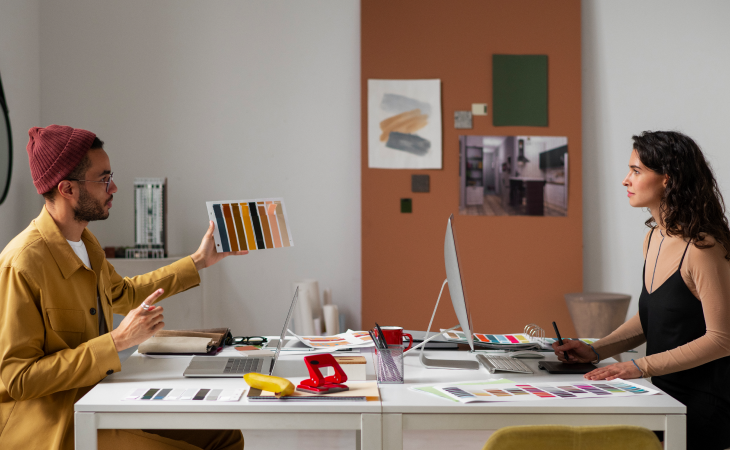
An interior design course is a comprehensive program that trains students to plan, design, and furnish the interiors of private homes and commercial establishments. It teaches you how to look at a blank shell of a building and envision a space that is not only beautiful but also safe and highly functional.
It is a common misconception that interior design is just “decoration.” While decoration is a part of it, a professional course delves into space planning, ergonomics, sustainable building materials, and building codes. You learn how humans interact with their environment and how to use lighting, acoustics, and materials to improve that experience.
What You’ll Learn (Interior Design Syllabus)
Most professional programs are designed to take you from a beginner to an industry-ready professional. Key modules include:
- Design Fundamentals: Principles and elements of design, color theory, and sketching.
- Space Planning: Mastering the layout of a room to maximize utility.
- Technical Tools: Gaining proficiency in CAD in interior design (AutoCAD), SketchUp, and Revit for 3D modeling.
- Materials & Finishes: Understanding the life cycle and application of wood, glass, fabrics, and metals.
- Communication & Presentation: Learning how to pitch your visual ideas to a client effectively.
What is a Bachelor’s Programme in Retail & Interior Design?

If you are looking for a program that offers global standards and industry exposure, the Bachelor’s Programme in Retail & Interior Design at Ecole Intuit Lab is a standout option. This 4-year undergraduate program is specifically tailored for the modern design landscape.
- Global Exposure: With a network spanning 8 campuses (including Mumbai, Paris, and New Delhi), students benefit from international workshops and exchange programs.
- Industry-Ready Curriculum: The course integrates AI in design, sustainable practices, and cultural understanding to ensure you are ahead of the curve.
- Real-World Experience: The program includes mandatory short (1–2 months) and long (6 months) internships, giving you a taste of the professional world before you even graduate.
- Success Rate: With a 98% graduate employment rate, the school emphasizes professional integration through portfolio development and capstone projects.
What is the Eligibility for Interior Design?
One of the biggest advantages of choosing interior design as a career after 12th is its accessibility. Students from Science, Commerce, or Arts streams are eligible to apply for the course.
Ready to turn your passion into a profession? Join a community of innovators at Ecole Intuit Lab. Apply for the Bachelor’s Programme in Retail & Interior Design and gain access to international faculty, global internships, and a world-class portfolio.
What Skills Do You Develop in an Interior Design Course?

A degree in this field equips you with a “hybrid” skill set half creative and half technical.
- Technical Proficiency: You will master CAD in interior design and various 3D rendering tools that allow you to create photorealistic walkthroughs of your designs.
- Visual Storytelling: Learning how to use mood boards, textures, and lighting to tell a story through a physical space.
- Problem-Solving: Designing for small, cramped urban spaces requires high-level design thinking.
- Project Management: Coordinating with vendors, architects, and contractors to bring a vision to life.
What Career Opportunities Are Available After an Interior Design Course?

The scope for interior design careers is expanding beyond just “home design.” Today’s designers are needed in films, retail, corporate offices, and even the metaverse.
| Job Role | Description |
| Residential Designer | Designing private homes, apartments, and luxury villas. |
| Retail Space Designer | Creating brand-focused experiences for stores and malls. |
| Furniture Designer | Crafting custom furniture that blends form and function. |
| 3D Visualizer | Creating digital 3D models and renderings for architectural firms. |
| Set Designer | Designing spaces for movies, theater, and television. |
What Is the Salary of an Interior Designer in India?
- Entry-Level: ₹2.5 – ₹6 LPA
- Mid-Level: ₹6 – ₹12 LPA
- Experienced / Specialized: ₹15 LPA and above
With experience, strong portfolios, and specialization in retail or hospitality design, income potential increases significantly. Freelancing and entrepreneurship also offer flexibility and higher earning opportunities.
Final Thoughts: Is an Interior Design Course Worth It?
Choosing an interior design course after 12th is a smart decision for students who want a career that is both personally fulfilling and financially rewarding. It is a profession that values originality, problem-solving, and technical expertise.
Whether you dream of designing luxury retail spaces, sustainable homes, or immersive environments, interior design offers endless possibilities—starting with the right education.
FAQs
1. Can I pursue an interior design course if I studied Arts or Commerce in 12th?
Yes, students from any stream Science, Commerce, or Arts are fully eligible for interior design programs.
2. What is the average starting salary for an interior designer in India?
Entry-level interior designers in India typically earn between ₹2.5 to ₹6 LPA, depending on their skills and location.
3. Is it necessary to be good at drawing to join an interior design course?
While basic sketching helps, the course teaches you professional drawing, design principles, and essential software from scratch.
4. Does the interior design syllabus include technical software training?
Yes, you will master vital industry tools like AutoCAD (CAD), SketchUp, Revit, and 3D rendering software.
5. What is the scope of interior design in India?
Interior design has strong demand across housing, retail, offices, hospitality, and entertainment sectors.
6. Will AI replace interior designers?
No, AI will support interior designers by improving efficiency and visualization, but creativity, human understanding, and design decision-making cannot be replaced.