Will AI Replace Graphic Designers or Create More Opportunities?
Share
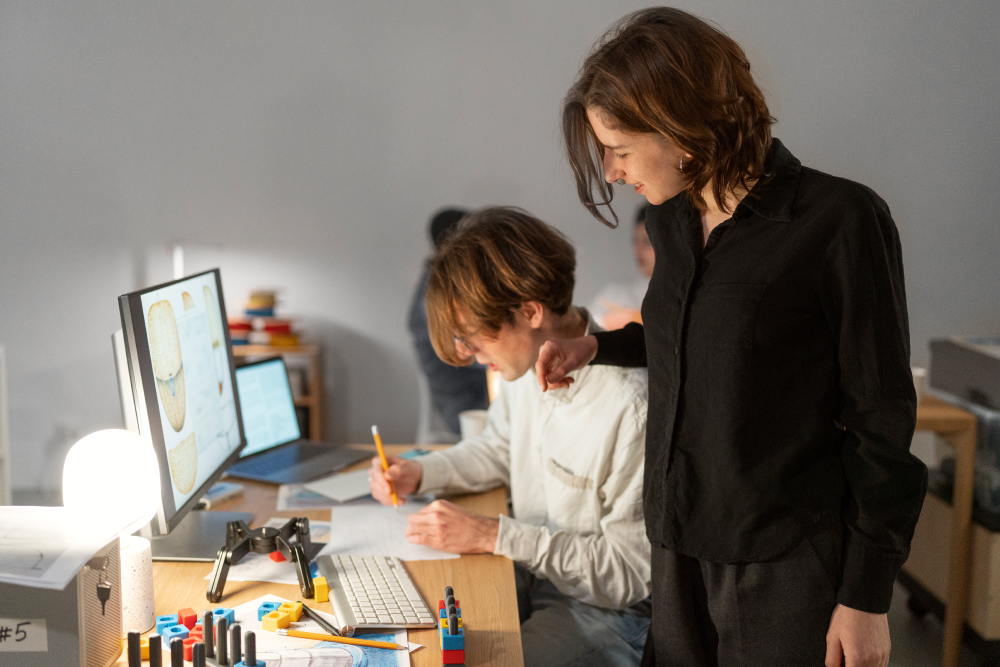
Artificial intelligence is transforming almost every industry, and the creative world is no exception. From AI-generated logos to automated design tools, students today are constantly exposed to headlines suggesting that technology may soon replace creative professionals.
As a result, many aspiring designers are asking an important question:
Will AI replace graphic designers?
For students considering a career in graphic design, this fear is understandable. When tools can generate posters, illustrations, and layouts within seconds, creative careers may suddenly feel uncertain.
But the reality is far more interesting than the fear.
AI is not simply replacing graphic designers. It is reshaping the industry, changing workflows, and creating a new generation of opportunities for designers who know how to combine creativity with technology.
In fact, the future may belong not to designers who compete against AI, but to those who learn how to work with it intelligently.
Why This Conversation Matters to Students Today

A few years ago, choosing graphic design as a career mainly meant learning software, understanding visual communication, and building creative skills. Today, students entering the design industry are also expected to understand digital experiences, emerging technologies, and AI-assisted workflows.
This shift has created confusion.
Many students worry:
- Will graphic design jobs disappear?
- Is graphic design still a good career choice?
- Should students still pursue creative careers after AI?
- Will companies hire AI instead of designers?
These concerns are growing because AI tools are becoming more visible and accessible. Platforms like Adobe Firefly, Midjourney, and Canva can now generate impressive visuals in seconds.
But speed alone does not replace creativity.
And that distinction is extremely important.
What AI Can Actually Do in Graphic Design
AI is highly effective at automating repetitive design tasks. Today, AI in graphic design can help with:
- background removal
- image enhancement
- layout generation
- social media templates
- color palette suggestions
- quick visual concepts
- typography combinations
- content resizing for multiple platforms
For example, a student designing a campaign poster can now generate multiple rough visual directions within minutes instead of spending hours creating initial drafts manually.
Many creative agencies and brands are already using AI tools during brainstorming and early concept development stages to speed up workflows. However, human designers still guide the final visual direction, storytelling, and branding decisions.
This shows an important shift:
AI is becoming part of the creative process, not a complete replacement for designers.
According to industry discussions around the future of creativity, many professionals are using AI to improve productivity rather than eliminate creative teams entirely.
But generating outputs quickly is not the same as understanding why a design should exist in the first place.
AI can create visuals based on patterns and prompts. It cannot independently understand brand psychology, emotional storytelling, audience behavior, or cultural sensitivity in the same way human designers do.
That is where designers continue to matter.
The Biggest Misconception About AI and Graphic Design
One of the biggest misconceptions is that graphic design is only about “making visuals.”
In reality, professional design is about solving communication problems.
A designer working on a mental health campaign, for example, must understand emotional tone, audience sensitivity, and visual messaging. A luxury fashion brand requires completely different storytelling than a gaming company targeting Gen Z audiences.
AI may generate attractive images, but it does not truly understand:
- human emotions
- social context
- cultural nuance
- audience psychology
- strategic communication
This is why many AI-generated designs still feel visually polished but emotionally generic.
Ironically, as AI-generated content becomes more common online, original human creativity may become even more valuable. Brands are already facing a growing challenge: standing out in a digital space flooded with similar-looking automated content.
That makes creative thinking more important, not less.
Why Human Creativity Still Has an Advantage
The strongest designs are rarely created by software alone.
They come from:
- lived experiences
- observations
- emotions
- experimentation
- curiosity
- storytelling
- cultural understanding
A human designer can connect visuals with emotion, purpose, and meaning. AI can imitate styles, but it does not experience the world the way people do.
For example, when a designer creates branding for a local café, they may draw inspiration from:
- neighborhood culture
- customer behavior
- music
- fashion trends
- emotional atmosphere
- real-world experiences
That human perspective cannot be fully automated.
A student exploring graphic design today is not just learning software like Photoshop or Illustrator. They are learning how to communicate ideas across brands, digital platforms, apps, campaigns, and interactive experiences.
Read more here:
Exploring the World of Graphic Design, Top Courses to Consider
This is why brands still need designers who can think creatively instead of simply generating visuals quickly.
How AI Is Changing Graphic Design Careers
AI is not eliminating graphic design careers. It is changing what companies expect from designers.
Earlier, designers were valued mainly for execution skills. Today, companies increasingly value:
- creative thinking
- design strategy
- storytelling
- user experience
- problem-solving
- brand communication
- adaptability
This means future graphic designers may spend less time on repetitive production work and more time on conceptual thinking and creative direction.
In many ways, AI is pushing the industry toward higher-level creativity.
Designers who only depend on basic software execution may struggle. But designers who can think strategically, communicate ideas clearly, and understand human-centered design will continue to stay relevant.
New Career Opportunities Emerging Because of AI
One important reality often ignored in this conversation is that AI is also creating entirely new creative career opportunities.
As businesses produce more digital content than ever before, the demand for creative professionals is increasing across industries.
Today, companies need designers for:
- UI/UX design
- motion graphics
- digital branding
- interactive media
- gaming visuals
- content design
- social media storytelling
- immersive experiences
- product visualization
New roles are also emerging, including:
- AI-assisted designer
- creative technologist
- visual experience designer
- prompt strategist
- digital storytelling specialist
- AI workflow consultant
The creative industry is evolving rather than disappearing.
What Graphic Designers Should Learn in the AI Era
1. Design Thinking
Understanding why a design works is becoming more important than simply creating visuals.
2. Branding and Storytelling
Strong brands are built through emotional connection and narrative, not just attractive graphics.
3. UI/UX Design
As digital products continue to grow, user experience design is becoming one of the most valuable creative fields.
4. Communication Skills
Designers often collaborate with clients, developers, marketing teams, and brands. Clear communication increases professional value.
5. AI Tool Adaptability
Students should learn how to use AI tools effectively instead of fearing them. Designers who understand AI-assisted workflows may work faster and more efficiently in the future.
What Will Graphic Design Careers Look Like in the Next 5 Years?
The future of graphic design careers will likely become more hybrid.
Designers may increasingly combine:
- creativity
- technology
- psychology
- storytelling
- user behavior
- digital strategy
The industry may also become more specialized.
Instead of being general graphic designers, professionals may focus on:
- brand identity systems
- motion design
- immersive experiences
- gaming environments
- AI-assisted content creation
- product interface design
- creative strategy
This shift is already happening globally.
The demand for visual communication is growing rapidly because businesses today compete heavily through digital experiences and online attention.
And despite advances in AI, businesses still need human creativity to stand out.
Should Students Still Choose Graphic Design in 2026?
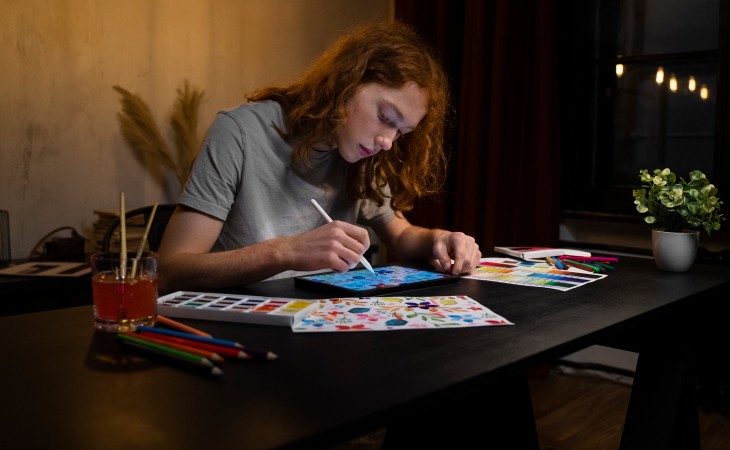
Yes, but students should approach it with the mindset of a modern creative professional.
Graphic design today is connected to:
- branding
- technology
- digital media
- UI/UX
- content creation
- interactive storytelling
- gaming
- advertising
- product experiences
Students who continuously learn, adapt, and develop strategic creative skills can still build strong and future-ready careers.
The goal is no longer just learning software.
The goal is learning how to think creatively in a rapidly changing world.
Final Thoughts
So, will AI replace graphic designers or create more opportunities?
The answer is both simpler and more optimistic than many people expect.
AI will automate certain tasks. It will change workflows. It will reshape how designers work.
But it is unlikely to replace the human side of creativity, the ability to think emotionally, communicate meaningfully, understand people, and create experiences that truly connect with audiences.
In fact, the rise of AI may increase the importance of originality because brands are becoming surrounded by similar-looking automated content.
The future of graphic design careers will likely belong to designers who:
- adapt to technology
- understand human behavior
- think strategically
- tell meaningful stories
- use AI as a creative tool rather than fear it
For students exploring creative careers, this is not the end of graphic design.
It is the beginning of a more evolved, technology-driven, and creatively demanding era where human imagination still remains at the center of great design.
FAQs
1. Will AI completely replace graphic designers?
No. AI can automate repetitive tasks and generate visuals quickly, but it cannot fully replace human creativity, emotional intelligence, strategic thinking, and storytelling.
2. Is graphic design still a good career after AI?
Yes. The demand for digital content, branding, UI/UX, motion graphics, and interactive experiences continues to grow, creating new opportunities for skilled designers.
3. What graphic design jobs are safest from AI?
Roles involving branding strategy, UI/UX design, creative direction, storytelling, and human-centered design are less likely to be replaced because they require critical thinking and emotional understanding.
4. Should students learn AI tools as designers?
Absolutely. Learning AI tools can improve productivity and help designers adapt to changing industry workflows.
5. Can AI create truly original creative ideas?
AI can generate content using existing patterns and data, but original creativity often comes from human experiences, emotions, observations, and cultural understanding.


