How to Become a Digital Product Designer Without a Design Background
Share
If you come from commerce, engineering, psychology, or any non-design field, chances are you’ve opened apps like Airbnb, Duolingo, or Swiggy and thought, “I wish I could build something like this.”
The good news? In 2026, you absolutely can.
The outdated idea that designers must come from fine arts or visual design schools no longer applies. Today’s most successful digital product designers often come from non-design backgrounds, and that diversity of thinking is exactly what companies value.
This guide breaks down how to become a digital product designer without a design background, step by step, covering required skills, portfolio strategy, learning paths, and career opportunities in 2026.
Can You Become a Digital Product Designer Without a Design Background?
Yes, you can become a digital product designer without a design background by learning UX and UI fundamentals, mastering design thinking, building case-study-driven portfolios, and gaining hands-on experience through real or simulated projects. Employers prioritise problem-solving skills and process over formal design degrees.
What is Digital Product Design, and why is everyone talking about it?
Before we dive into the how, we need to understand the what. Many people confuse digital product design with graphic design. While graphic design is about communication (making things look good), digital product design is about interaction (making things work well).
A Digital Product Designer is the architect of the digital world. They don’t just decide what colour a button should be; they decide why that button exists, where it should go, and how it solves a user’s problem. It’s an iterative process of research, prototyping, and testing.
If you want a deeper dive, check out our blog on what digital product design really means.
Why Digital Product Design Is a Strong Career Choice in 2026

The digital economy is no longer experimental, it’s foundational. In 2026, every company is a digital company, and design has become a business-critical function.
High Demand Across Industries
From fintech and healthtech to SaaS and e-commerce, organisations need designers who understand users, systems, and outcomes.
Ideal for Non-Coders Who Love Tech
You work closely with technology without spending all day writing code, making it a perfect middle ground between creativity and logic.
Strong Salary and Career Growth
Product designers sit at the intersection of design, business, and technology, making them one of the highest-paid creative professionals today.
In a fast-changing digital economy, staying relevant means going beyond self-learning, understanding why a digital design course has become essential makes all the difference.
What core skills do you need to master to transition?
If you don’t have a design degree, your “resume” is your skill set. You don’t need to be a Da Vinci, but you do need to master these three pillars:
1. UX (User Experience) Design & Research
This is the “logic” part of the job. You’ll learn how to conduct user interviews, create “personas” (profiles of your typical users), and map out user journeys. You are essentially a detective trying to find where the user gets frustrated and how to fix it.
2. UI (User Interface) Design
This is the “visual” part. You’ll study color theory, typography, and spacing. In 2026, this also includes mastering AI-assisted design workflows, where you use AI tools to speed up the creation of layouts while you focus on the creative direction.
3. Design Thinking & Problem Solving
Design thinking is a structured approach to innovation that includes five stages:
Empathise → Define → Ideate → Prototype → Test
This framework is where non-designers often excel because it mirrors engineering logic, research thinking, and strategic planning.
Step-by-Step: How to Transition Into Digital Product Design Without Experience
Step 1: Learn the Fundamentals
Start with UX/UI basics, design thinking principles, and industry-standard tools like Figma. Focus on why design decisions are made, not just how to execute them.
Step 2: Build Case-Study-Based Projects
You don’t need a job to gain experience. Create it.
- Redesign a feature of an app you use daily
- Identify a user problem
- Explain your design decisions
- Show iterations and learning
These self-initiated projects are widely accepted by recruiters in 2026.
Step 3: Focus on Process, Not Perfection
Hiring managers don’t want pixel-perfect screens alone. They want to see:
- Research insights
- Wireframes
- Failed ideas
- Testing feedback
Your thinking process matters more than visuals.
Step 4: Gain Real-World Constraints
Volunteer for non-profits, student startups, or local businesses. Working with real users and limitations adds credibility to your portfolio.
How to Build a Digital Product Design Portfolio From Scratch
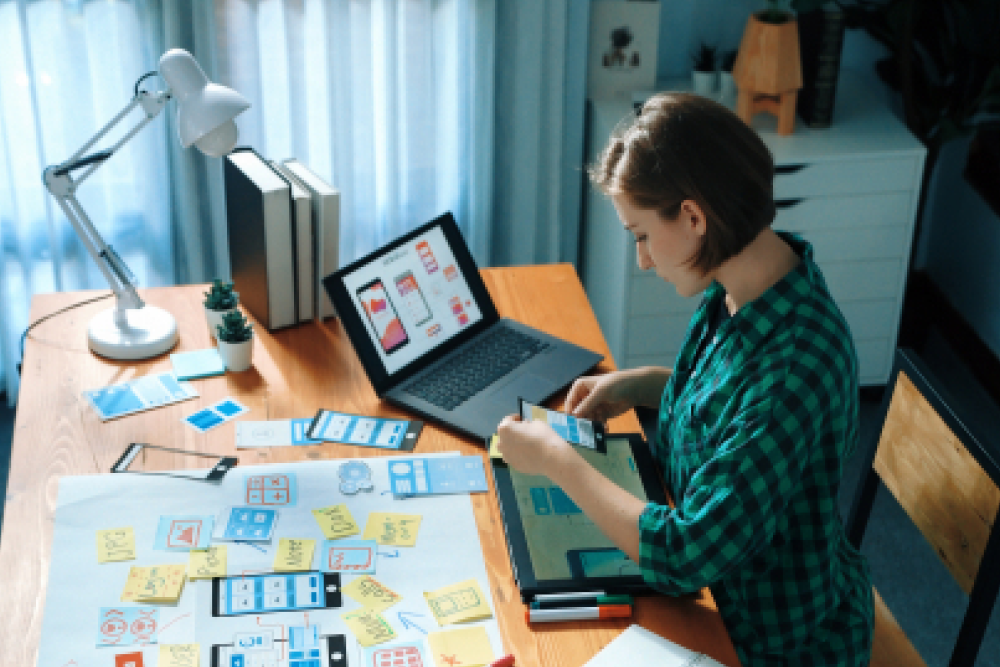
Your portfolio is your resume in product design.
A strong beginner portfolio should include:
- 3–5 detailed case studies
- Clear problem statements
- Research insights
- Design iterations
- Outcomes and learnings
Avoid showcasing only final screens. In 2026, recruiters care more about decision-making ability than aesthetic polish.
How does a professional course bridge the gap for non-designers?
While self-learning is a great start, the “self-taught” path often lacks the industry connections and structured feedback needed to land roles at top-tier firms. This is where a specialised program makes all the difference.
If you are serious about this transition, Ecole Intuit Lab offers a world-class environment designed specifically to turn your passion into a professional career. Their Bachelor’s Degree in Digital Product Design is more than just a course, it’s a career incubator.
Why Ecole Intuit Lab is the right choice for career-switchers:
- Hands-on Curriculum: Forget dry lectures. You’ll be working in “Labs” where you translate ideas into functional digital products.
- Global Exposure: With international workshops and internships in India and abroad (Europe, Americas), you get a global perspective on how design works in different cultures.
- The Professional Edge: You aren’t just learning Figma; you’re learning value propositions, customer research, and the entire digital product lifecycle.
- Creativity Supported by Logic: The program is designed to take students who have a “flair for the creative” and give them the technical tools to be “creative problem solvers.”
Whether you’re a fresh 12th-grade graduate or a professional looking to transfer from another stream, this program provides the mentorship and portfolio-building opportunities you need to stand out.
Apply now and start building a career in digital product design.
Final Thoughts: Is a Non-Design Background a Disadvantage?
In 2026, a non-design background is often a competitive advantage.
You bring:
- Domain expertise
- Analytical thinking
- User empathy
- Business understanding
When combined with design skills, these qualities make you a well-rounded digital product designer.
Digital product design is not about being artistic, it’s about solving meaningful problems through thoughtful solutions. And that is a skill anyone can learn with the right approach.
FAQs
Can someone without a design background be a digital product designer?
Yes, many digital product designers come from non-design backgrounds by learning UX/UI skills and building strong, process-driven portfolios.
How long does it take to transition into digital product design?
With focused learning and consistent practice, most beginners can build a job-ready portfolio within 6–12 months after a course of 4 years.
Is coding required to become a digital product designer?
No, coding is not mandatory, but understanding how developers work helps designers collaborate more effectively.
What matters more in hiring: a design degree or a portfolio?
In 2026, recruiters prioritise real-world case studies and problem-solving ability over formal design qualifications.
What industries hire digital product designers today?
Digital product designers are hired across fintech, healthtech, SaaS, e-commerce, and consumer app-based industries.